The Dayspring From On High Comes to the Aid of the Hobbits

Thanks to the people who have been reading this post today in the fourth week of Advent when, from of old, the church has sung the O Antiphons, an ancient prayer that had such an effect upon the young Tolkien when he first read them in Old English. The connections between Tolkien’s Christian faith and his legendarium are often hidden but they shine forth in Shelob’s Lair. When you have read this why not try putting the O Antiphons into a search engine and see where they take you.

stephencwinter's avatarWisdom from The Lord of the Rings

Frodo and Sam are trapped in the darkness visible of Shelob’s Lair as the foul monster advances upon them. As he grips the sword that he took from the barrow Sam suddenly thinks of Tom Bombadil. “I wish old Tom was near us now.” And as he does so it is not Bombadil who comes, but Galadriel, in an insight of such clarity that it has the force of a vision. Sam sees her as the giver of gifts upon the lawn in Lothlórien when she gave to Frodo the Star Glass, “a light when all other lights go out.”

Frodo raises the glass and the light of a Silmaril blazes forth in the darkness. Frodo is wonderfully empowered by this and he advances upon Shelob crying, “Aiya Eärendil Elenion Ancalima!” Frodo does not know what words he speaks for it as if another voice has spoken them in this place of…

View original post 530 more words

Faith and Fantasy: Tolkien the Catholic, The Lord of the Rings, and Peter Jackson’s Film Trilogy

Tolkien caused the Fellowship of the Ring to set out from Rivendell on their great journey on December 25th, Christmas Day, the Feast of the Nativity, and that the Ring should be cast into the fire on March 25th, the Feast of the Annunciation (which is in itself a huge clue to the reality that his story points to something greater than itself. The fall of Sauron is not the end of the story.) Stephen Greydanus has written a beautiful reflection on the Catholic Faith that Tolkien brought to the writing of his greatest work and in this final week of Advent I would like to offer it to you here.

Gandalf Teaches Us that the Just Shall Live by Faith.

Let us begin by speaking in the defence of Denethor, Steward of Gondor. He is no traitor. He knows about the Ring and about Frodo’s mission but even though he is in despair when he looks into the Palantir for the last time he does not betray what he knows. Sauron may have been able to seduce the proud heart of Saruman but Denethor is too great a man for that. But the Dark Lord is able to control all that Denethor can see in the Stone and so at the last as Denethor sits beside his wounded son his spirit is broken and he refuses to lead his people in their final defence against the hosts of Mordor.

“Follow whom you will,” he says, “even the Grey Fool, though his hope has failed. Here I stay.”

And so at the darkest moment it is Gandalf who takes command of the defences of the city.

“Wherever he came men’s hearts would lift again, and the winged shadows pass from memory. Tirelessly he strode from Citadel to Gate, from north to south about the wall; and with him went the Prince of Dol Amroth in his shining mail.”

All through his stewardship Denethor has placed great value on the gaining of intelligence and it has served him well. He has often been able to remain a step ahead of his foes and to muster sufficient force to hold them at bay. But Sauron has always been able to play a long game. Even the loss of an army has not truly weakened him and at the last he is able to show such overwhelming force that Denethor is convinced that all is lost and so he abandons the duty that he owes to his people and retreats to a private place within his heart.

Gandalf knows just as much about the power of his enemy as does Denethor. In his case that knowledge is not about the size of a particular army but is based upon an experience of long resistance to a foe that he first encountered when Sauron was chief lieutenant to Morgoth in the First Age of the Earth. Gandalf knows, even more than Denethor, just how powerful Sauron is and yet he does not despair. Denethor derides Gandalf’s refusal to give in as a “Fool’s Hope” but it is founded upon something that goes far deeper than that.

Gandalf’s “Fool’s Hope” is based, as far as Denethor is concerned, upon the belief that two hobbits can penetrate the defences of Mordor and carry the Ring to the Cracks of Doom and there destroy it. For a man who has spent his life assessing the likely outcome of any action based upon good intelligence the possibility that Frodo will succeed is so ridiculously tiny as to be laughable. Of course any course of action based upon such a possibility can only be dismissed as a “Fool’s Hope”. But Gandalf has not placed his faith in Frodo. Of course he trusts that Frodo, aided by Sam, will give the very best that they can and he honours them for this but it is not their courage or even their luck that is the basis of his faith. Gandalf’s faith is in God and in a goodness that will ultimately prevail even though all seems lost. Frodo caught a glimpse of the Music of the Ainur when in the Halls of Elrond in Rivendell, an unseen flow that runs through history and will carry us to an ending that will have nothing to do with death so that its aliveness will be beyond anything that we have ever known. Sauron can never know it because he can only see death and darkness as the end of all things and so he worships these things. Gandalf  has long known this music and so he teaches us, as does St Paul, that “the just shall live by faith” and he refuses to give in even if the end of the battle will be his own death. He knows that his own death will not be the end.

Holy Fool

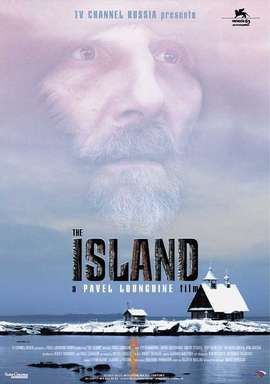
Thanks to Father Aidan Kimel I came to know this remarkable film recently and I have watched it twice in recent weeks. Now I want everyone I know to see it too. Father Kimel has written an excellent review and includes a link to the film and I have reblogged both here. I particularly liked the phrase in his review that begins, “To his surprise, irritation and bewilderment, God makes him…” I will let you read the rest of the sentence and the rest of the review.
That phrase made me ponder the question, What has God made me do over the years that I have not welcomed and yet has proved to be essential in revealing my True Self, that which God loves?
I do hope that some of you will watch The Island and that you will let me know your response. I know that it will change me on repeated viewings over the years.

Fr Aidan Kimel's avatarEclectic Orthodoxy

A few weeks ago Fr Ioan Badilita, Romanian priest and Dogmatic professor at the Theological Seminary in Iasi, encouraged me to watch The Island. I immediately ordered it from Amazon. This past Friday evening my wife and I sat down and watched it.

I loved it … no … that is not the right word. I was moved and inspired by it. It touched my soul. I know I will watch it again. It is a movie that I need to watch once a year. Lent would be the right time.

The Island presents the story of a man who commits a terrible act of betrayal and violence, becomes a monk, and spends the rest of his life offering penance and tears to God. And to his surprise, irritation, and bewilderment, God makes him a fool for Christ and worker of miracles. Fr Anatoly does not wander the streets nor…

View original post 275 more words

Eowyn of Rohan: a Call for Guestblogs

Many thanks to those who have offered to offered to write material on the story of Eowyn of Rohan. I can now say that a season on Eowyn will begin in the week of July 25th and will run through August. There is still time to send me your material. Please read my original blog post below for more details on how to take part. I am excited about this opportunity to reflect on Eowyn’s story and I hope that many will share in it as writers, commentators and readers.

stephencwinter's avatarWisdom from The Lord of the Rings

During the life of this Blog that is a slow and careful reading of J.R.R  Tolkien’s  The Lord of the Rings and my own reflections upon the story, the characters and the great themes of the book, one character has inspired many comments from readers and that is Eowyn of Rohan.

Over the years many have criticised Tolkien for what they have perceived as his “male centred” story. One might argue that Eowyn, herself, demands the attention of the men in her world. We don’t know about the women as I cannot call to mind a single interaction between Eowyn and any other woman in the story. Perhaps that is something a reader might like to reflect upon.

For a number of years now I have been wrestling with what constitutes an authentic male spiritual journey to true maturity. The Lord of the Rings has helped me greatly with…

View original post 475 more words

O Dayspring, Come and Enlighten Those in the Shadow of Death

When Frodo raises the star glass and cries out, “Hail, Eärendil, O Brightest of Stars!” he invokes a history of which, with Sam, he is now a major part. Throughout the history of Arda (the earth) there has been a war against the Light that began with Morgoth and now continues with his lieutenant, Sauron. The light of the Silmarils captured in the star glass once blazed forth from Morgoth’s iron crown after he stole them from Fëanor, their maker. One now shines out in the heavens at morning and at evening in the ship, Vingilot, with “Eärendil the mariner sat at the helm, glistening with dust of elven-gems, and the Silmaril was bound upon his brow”. We see it still today and know it as Venus, the Morning Star and the Evening Star.

Eärendil carried the Silmaril back across the seas to the Undying Lands and brought too the prayer of the peoples of Middle-earth to the Valar for mercy. For Morgoth had reduced them to ruin and, perhaps worse even than this, the sons of Fëanor, bound by a terrible oath to their father not to allow the Silmarils to fall into the hands of anyone even a friend, attacked Eärendil’s people and destroyed their homes. Eärendil, even as he bore this sorrow in his heart, prayed too for the sons of Fëanor when he came before the Valar.

Why do I tell this story even as Frodo holds the Star Glass before Shelob? It is because of the place of mercy in the whole of Tolkien’s great story. Tolkien said of Morgoth that “to him that was pitiless the deeds of pity are ever strange and beyond reckoning”. All through Tolkien’s tale it is such deeds that undo the enemy. Why is Frodo’s cry effective?  It is because of the pity of Eärendil. It is because of the pity of Bilbo. It is because of the pity of Galadriel who gave the glass to Frodo. We do not stand because of our own deeds but because of all who have come before us.

In his poem on the Advent antiphon, O Oriens,  Malcolm Guite makes this point exactly. Oriens is the Morning Star, the Dayspring, the herald of grace and of hope. Guite quotes from Dante’s Paradiso at the heading of his poem when Dante tells us that he saw “light in the form of a river”. The story of light is a river in which we, by grace and mercy, now stand.

“Dante and Beatrice are bathing in it now, away upstream…  so every trace of light begins a grace in me, a beckoning. ”

Once again we remember Frodo’s dream in the halls of Elrond in Rivendell; a dream that ended with the sound of Bilbo telling the story of Eärendil. And we begin to understand that we too receive so much from the mercy of others and that every act of mercy that we perform today is a gift to people yet unborn. We stand here because of the prayers of others before us. Others stand today and will stand in times to come because of our prayer and our acts of mercy.


given

I am so grateful for this blog posting at a time when the challenges that Dom Christian faced seem to have come a little closer to all of us. Dom Christian’s deep honesty about himself prevents us from seeking some romantic version of our faith in which we become heroes. Like Dietrich Bonhoeffer a generation before he is content simply to be a human being in fellowship with other human beings. Those who are drawn to this story of faith might want to see “Of Gods and Men” a film that tells his story and the story of his community and that of the people among whom they lived with the kind of honesty (and love too) that is displayed in Dom Christian’s prayer here. May we be just a little more worthy to be named as his brothers and sisters today. Let us pray for one another and for all our suffering brethren especially those who have had to flee their homes from the evil actions both of ISIS and the Assad regime in Syria. Let us open our hearts and homes to them in their need.

pilgrimpace's avatarPilgrimpace's Blog

Our hearts are broken this week by the massacres in Paris over the weekend – and of course those in other parts of the world we hear less about in the western media.

I am thinking and praying hard about this at the moment as I will have to preach about it on Sunday.

I know I will want to be saying things about the need to carry on living; to overcome fear; to live together with our neighbours in this city and world; for solidarity; and something about the very hard things Jesus says about the need to forgive and the duty to pray for and love our enemies.

4221396001_4614350457001_4614109451001-vs

As I pause and pray and light candles and wrestle with darkness, I go back to this remarkable document written nearly twenty years by Dom Christian de Cherge, Abbot of the Cistercian Monastery in Tibhirine in Algeria, as he lived…

View original post 727 more words

john hull

Back in 1988 I was ordained a minister in the Church of England in Birmingham, England. The very next day I attended a meeting of clergy from parishes in the city centre and the speaker was the Dean of Education at Birmingham University, Professor John Hull. He spoke of a meeting between the University Vice Chancellor and the Faculty Deans. He told us that the Vice Chancellor had informed the Deans that the only word in the University that had any meaning any longer was money. On the way out of the meeting a colleague took him aside. “You’re a Christian,” he said. “I want to come to church with you this Sunday. After that meeting I feel dirty.” For the rest of his life John made sure that people would know that a witness to Christ meant a denial of the Money God.
Please read this fine appreciation of this passionate disciple of Christ. Delight too in the wonderful poem by e.e cummings . Rest in peace, John, and Rise in glory.

pilgrimpace's avatarPilgrimpace's Blog

A couple of days ago I went to the Funeral of my friend John Hull.

Here are a scattering of memories and reflections in tribute.

HullatISREV_XV

Over the last couple of decades, John has been a real friend and someone who has pushed my thinking and my action.  I first met him when I was a new Curate.  One of the first things I had to do was help develop and run a Confirmation Course; it had to be good – two of John’s boys were on it; we were teaching the children of the Professor of Religious Education.  Since then, we have met regularly for lunches where we have drunk red wine, laughed outrageously, asked very good and penetrating questions, put work and plans under scrutiny.  John helped me a lot when I was asked to be Chaplain with Deaf People and I was new and trying not to blunder…

View original post 277 more words

Akallabêth

Jubilare writes beautifully about the Akallabêth, J.R.R Tolkien’s telling of the downfall of Númenor near the end of The Silmarillion. If you read this fine piece then you will get so much helpful background to the material I am writing at present.

jubilare's avatarjubilare

According to Pages Unbound, today marks the anniversary of Sauron’s downfall! I will take their word for it. To celebrate the occasion, the Tolkien Society is holding a Tolkien Reading Day.

The ways of participating are:

  • Grab the event button from Pages Unbound and put it on your blog.
  • Read a book by J.R.R. Tolkien this week and post a review!  If you do, Pages Unbound, Tolkien Society, and I all want to know so that we can read it!  (Find reading suggestions on the Tolkien Society’s Bibliography.)
  • Spread the word on social media.
  • Link to any past posts you may have made about Tolkien, his writings, or even the movies in the comments on this post.

To fulfill the second option, I am going to yammer about the Akallabêth, that short history of the Númenoreans tacked onto the end of J.R.R. and Christopher…

View original post 509 more words

Elizabeth Winter (nee Foster) April 29th 1925 to June 6th 2015

James Street, Cleator Moor

On the West Cumbrian coastal plain in the North-West of England lie a string of villages near the once important sea port of Whitehaven the most important of which are Egremont, Frizington, Cleator and Cleator Moor. Due to deposits of coal and iron-ore they enjoyed a brief flourishing at the end of the 19th century and early in the 20th and in that time attracted considerable immigration from Ireland both Catholic and Protestant, Nationalist and Unionist. As has been the nature of the flourishings of the Industrial Revolution once the earth has been stripped of its treasures the people who worked on them, who built communities and shared histories are more or less left to fend for themselves and it was into such a community that my mother, Elizabeth Foster (known as Betty as a girl) was born. There was still a mine in Cleator Moor until the 1960s and I remember playing on the steep sided heap of slag there with local boys and watched the steam locomotives as they pulled trucks of material away from the mine. I spent my summers with my mother’s family and loved it although I did not understand the question, “Are you a Cat (a Catholic) or a Proddy-Dog (Protestant) ?” having been raised in the gentle South of England. In the second summer I spent in Cleator Moor the slag heap was gone and we played on the disused tracks of the mine railway. And my mother’s family were Protestant and very strictly so.

It was into this world that my mother was born. I wish I could tell you about her parents, my grandparents, but I know almost nothing about them for at some point in her early life she was taken in by her grandmother and lived the rest of her early years at 2 James Street, Cleator Moor, a tiny miners’ cottage with a toilet in the shed in the yard and no indoor bathroom. It was a household of women for the First World War had robbed them of men and my mother’s uncles, Tommy and John are both buried in military cemeteries in France and Belgium. It is said that their father died of a broken heart soon after. Their mother did not however, taking in her  grand-daughters, Annie and Winnie as well as my mother. It was a household full of images, the photographs of young soldiers on the mantlepiece. My mother did not know who they were and she did not ask. She did not know why Christmas Day was so sad either. It was years later that she learned that it was on Christmas Day 1918 that her Uncle John died from his wounds, sustained just before the war, in a military hospital in Belgium. I have seen his photograph. He was hardly more than a boy.

My mother revered her grandmother and stories about her were a part of my own childhood. I hope to meet this brave woman some day and to do her honour. She used to make my mother walk to Frizington each Sunday afternoon to visit her parents. After her grandmother died she never went again. I never met my grandparents or their son, my uncle and know nothing about their lives. I am not sure that I want to find out.

I must not give the impression that life was only cold and hard although growing up in the Depression with very little money must have been hard. My mother tells stories of winning a race at Sports Day at Montreal Primary in Cleator Moor. I have seen the certificate! She also loved to go dancing and for her, the outbreak of the Second World War meant interesting new dancing partners. She spoke of the slightly dangerous (and exciting?) French Canadians stationed nearby and Polish officers with their formal manners. They bowed stiffly to her when asking for a dance. She also spoke of having to climb in through the coal hole when she came home as the door to the house was locked against her.

I realise that this posting could become very long indeed so I must continue more quickly but I loved the stories of the mischievous side to my mother’s character and her sense of adventure too. She left Cleator Moor at the end of the war, heading down to Preston in Lancashire and from there she would go dancing in the Blackpool Tower ballroom getting the last bus back to Preston and walking alone through the darkened streets of the town. She also spoke of an insurance policy in her name maturing and how she spent it all on one holiday in Blackpool. But my own particular favourite story of her mischievous sense of fun was how, after she began to train as a nurse in London, she had been on a visit home and when returning by train fell in with some American soldiers. They must have been delighted to meet this very pretty nurse (I have seen photos from those days and she was very pretty indeed!)  and by the time they reached London she was rather drunk. It was my father who met her at the station and who, on greeting his very tipsy girlfriend bidding farewell to her new American friends, took her gently by the arm and steered her away, acting as if nothing had happened. My mother told me that it was at that moment that she decided that he was the man for her.

I have got slightly ahead of myself and must go back a little. My mother’s travels had by this point taking her to London where she trained as a nurse at the isolation hospital at Joyce Green in South East London. The hospital was by the banks of the River Thames situated there so that in a time of an epidemic in the city the sick could be loaded up on boats to be transported down the river to the hospital. The hospital required a farm to supply it, especially in times of emergency, and it was run by a young man called John Winter, my father.

My father had been raised in London, the son of Bert and Lucy Winter. Bert, my grandfather, was a London black cab taxi driver and my father’s first job before the outbreak of war was at Covent Garden Fruit and Vegetable Market in the heart of London. As with many men of his generation the war opened up doors that had until then been closed. My Father served in the Royal Artillery during the war, taking part in the Normandy landings of June 1944, and the battles through western Europe and into Germany, and when he was finally demobilised from the army in 1947 as a Sergeant Major he took the opportunity to go to Agricultural College and and spent his working life running farms. My mother and my father married in August 1952 and I was born, their first son, in February 1955.

I will write more of their life together in another posting soon but will end here by saying that my mother loved her new family. Her mother in law was good, strong and very kind and my mother wrote to her every week sharing news of her growing family. My grandmother told me years later that she too had been very drawn to her own mother in law who was good and kind, and as I was later to learn, Italian! I love the fact that I am descended from so many immigrants on both sides of my family! But what I mainly want to say here was that both women, my mother and my grandmother were drawn to strong, kind women. I have much to be grateful for to all the women in this story I have told so far.

END OF PART ONE