Uncategorized
Peregrine Took’s Guide to Life
There is a clue in the words that Pippin speaks that we considered last week to the way in which he will deal with the feeling of uselessness. “I wish I could get free!” he says to himself.
If we were to read a hobbits’ guide to Life, some kind of self-help manual or at least if we were to read a self-help manual as written by Peregrine Took we would find little reflection upon a search for meaning. It is not that Pippin is incapable of reflection and later in the story we will come across a particularly moving conversation that he and Merry have together about what they have learned upon their travels but on the whole Pippin is not given to much introspection or much forethought for that matter. Sometimes this will get him into trouble but at this moment it is a source of strength to him because he is able to give all of his attention to the matter at hand. How is he to get to free?

And from the moment that he moves from asking questions to which he has no answer to the moment when he and Merry step into the Forest of Fangorn, free from their Orc captors but with no idea of what to do next except that they know that they would rather face the Forest than the Orcs this is how Pippin will deal with every challenge that he has to face. He will not ask himself whether he has the capacity to escape from the orcs he will simply deal with one thing at a time. And as he does so his confidence in his capacity to face each challenge will grow.
At times when life seems to overwhelm us it might actually be Pippin who can help us through. He won’t be able to help us make sense of the bigger questions like, “why is this happening to me?” or “why does God allow suffering in the world?” If you were to ask him a question like that he would probably say something like, “You had better ask Gandalf or Elrond. I don’t think I could help you on that one. Let’s go and find something to eat!” Pippin does not spend too much time speculating. He gets on with the task that lies to hand and saves his energy for the next task and then the next one too. Key to being able to do this is staying cheerful and Merry and Pippin put a lot of effort into that task. When they make a joke and Ugluk tries to terrify them into silence by threatening them with the terror that lies ahead of them they pay little attention to him. They will deal with the terror when they get to it with as much courage as they can. They won’t waste what energy they have by being afraid of it now.
This reminds me of the spirituality of the boy who offers his lunch as an answer to the question “How are we to feed all these people?” in the story of the Feeding of the Five Thousand. He does not seem to be worried by the problem as the disciples are. He simply offers what he has. Pippin would approve! And at those times when we seem to be confronted by problems that are too big for us to solve then we might do the same: we might simply offer what we have.
What Good Have I Been- the fear of being useless
Pippin wakes up in a vision of hell as the prisoner of the orcs and a voice of condemnation cries out against him.
“I wish Gandalf had never persuaded Elrond to let us come,” he thought. “What good have I been? Just a nuisance: a passenger, a piece of luggage. And now I have been stolen and I am just a piece of luggage for the Orcs. I hope Strider or someone will come and claim us! But ought I to hope for it? Won’t that throw out all the plans? I wish I could get free!”
Of course the voice of condemnation is in his own head and that is where such voices always sound the loudest. Throughout the journey the young hobbits have been surrounded by intent and capability. Aragorn, Gandalf, Boromir, Legolas and Gimli are all battle-hardened warriors. Frodo and Sam share the task that must be fulfilled, the destruction of the Ring. But Merry and Pippin have no skill as warriors and no great task to fulfill. All they have brought with them is their loyal friendship. At this moment the gift they have offered since the unmasking of the conspiracy at the cottage at Crickhollow in The Shire seems to have very little value. They have simply been a nuisance and they have always been “looked after”.
As I speak to those who are growing older one of the things that strikes me is that this fear of being “a nuisance: a passenger, a piece of luggage” is one of the greatest of all their fears. Perhaps we carry that fear with us all through our lives. Only at one time in my life did I ever stand in the Dole Queue but it remains a powerful memory. At that moment I felt useless. The bus station in my town was just opposite the office where I had to sign on and each time I got off the bus I would take a walk around the streets for a few moments so that no one would see me walk straight from the bus in order to join the queue. I remember too the feeling of relief when I got work as a day labourer with an employment agency. No work felt too demeaning. I was paying my way, making my contribution to the household of which I was a part. Even now as I work freelance and find my work to be profoundly fulfilling there is a part of me that still seeks to keep the feeling of uselessness at bay. Will I be content and at peace in my old age? It is a discipline, the discipline of delight that I am still seeking to learn though I pray for it each day.
Next week we will think about what Merry and Pippin, the luggage of the Orcs, seek to do in their misery. The clue lies in the last phrase of the quotation of Pippin’s speech: “I wish I could get free!” But this week I invite you to share in their misery. Not in order to wallow in it but in order to examine yourself, becoming aware of the voices of condemnation that shout loudest in you, perhaps of your own fear of being “useless”. 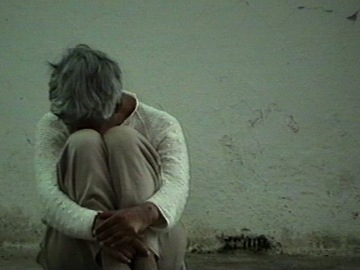
The True Power and Majesty of Kings
As Aragorn journeys further and further away from Gondor, the place of his dream, on what seems to be the hopeless quest of rescuing Merry and Pippin from the orc host who have taken them prisoner, he encounters a war band of the Riders of Rohan riding homeward from the destruction of that very host. The war band are commanded by Eomer, nephew of Théoden, king of Rohan and against the orders of the king they have set out after the orcs on hearing of their incursion into Rohan. On meeting Aragorn, Legolas and Gimli they challenge them. Aragorn’s response to the challenge is astonishing. He invokes the name of his mighty ancestor, Elendil, the last and only king of the two kingdoms of Gondor and Arnor and then he continues:
“I am Aragorn, son of Arathorn, and am called Elessar, the Elfstone, Dunadan, the heir of Isildur Elendil’s son of Gondor. Here is the Sword that was Broken and is forged again! Will you aid me or thwart me? Choose swiftly!”
Aragorn has no more time for courtesies, however time honoured they might be. This is the true crisis, the moment of doom, of judgement, and courtesy is at such moments simply time wasting. Nor is there time for weighing up what choices might be available. Aragorn has given his command, “Choose swiftly!” and the command must be obeyed whether Eomer chooses for him or against him. Eomer is awestruck, but so are Gimli and Legolas who have travelled with him since Rivendell.
“They had not seen him in this mood before. He seemed to have grown in stature while Eomer had shrunk and in his living face they caught a brief vision of the power and majesty of the kings of stone. For a moment it seemed to Legolas that a white flame flickered on the brows of Aragorn like a shining crown.”
Readers may remember the “kings of stone”. We encountered them on the river journey down the Anduin from Lothlorien and they may remember that Aragorn gave his ancestors a lordly greeting and then seemed to shrink into himself in his boat. It was the time of doubting when Aragorn questioned his very identity. It was the time of his Wilderness Temptation but that time is now over. It may be that in his pursuit of Merry and Pippin Aragorn has had to lay aside his kingly ambition for a time. It may be that he will lay down his life in a vain pursuit. But he no longer does so as a man wracked with doubt. The choice he has made is a kingly choice, a free choice, and he will not be thwarted by any man.
Readers may also have noted that I have used words like “Wilderness Temptation” and “Emptying”. I might also have used the phrase, “The kingdom of heaven is at hand.” The witness of the gospels and of the letters of the New Testament to Jesus the King resound with the same language that, in The Lord of the Rings, bears witness to Aragorn, who will be king of Gondor and Arnor. It is not that Tolkien is making Aragorn into a kind of Jesus, but that this language,and the language of the New Testament, reveals true kingship to us; the language first of self doubt and of emptying, and the language also of command. Aragorn has revealed himself to all as their true king.
Choose swiftly! Are with me or against me? The time of judgement has come! The kingdom of heaven is at hand!
Welcome to the new site for my blog
Thank you to all of you who have reading my weekly blog on J.R.R Tolkien’s The Lord of the Rings since December 2012 at http://www.stephenwinter.net/page6.htm I will continue to post it there as well as here for the time being but increasingly I have found that people have found difficulty using that site and especially leaving comments. I really want to develop the conversation that has begun with a few and so I have decided to start publishing it here at Word Press. I do look forward to a conversation with many of you.
When J.R.R Tolkien began work on The Lord of the Rings he saw it at first as a distraction from his great work which his son Christopher has been making available to us over many years. His publishers had written to him after the great success of The Hobbit, asking him for “more about hobbits”. Tolkien responded by asking “But what more can hobbits do?” Thankfully his publishers persisted and the great work that we know today painfully came into being.
I believe that The Lord of the Rings is an answer to Tolkien’s own question. It is not just that they prove more durable in tight situations than most consider them to be. It is that only hobbits, and one in particular, Frodo Baggins with his companion, Samwise Gamgee, are capable of doing the one thing that can save the the world from destruction and that is to take the One Ruling Ring to Mordor and to unmake it in the very fires in which Sauron first forged it. I see this, above all, as a spiritual capacity that they discover within themselves and which completely eludes the capacity of most of the great ones of their world to see. Only those who have begun to find the same capacity in themselves are able to do so.
As I invite you to read these short pieces that I will publish each week I want to say that I believe that is only by finding that same capacity, the capacity that the hobbits discover as do others in the story such as Gandalf, Galadriel, Aragorn, Faramir and Theoden can our world be saved from the destruction that we seem to be taking it into. As I write these posts each week I hope that I am beginning to understand and even to begin to find it in me. I invite you to seek to do the same.

