Bilbo Baggins’s Little Joke

The Fellowship of the Ring by J.R.R Tolkien (Harper Collins 1991) pp. 25-30

How might the Ring, the “One Ring to bring them all and in the darkness bind them in the Land of Mordor where the Shadows lie”, how might it have eventually taken possession of Bilbo had he kept it long enough?

I think that we get a clue that might help us answer this question in Bilbo’s “little joke”. The joke is first introduced to us in a conversation between Bilbo and Gandalf. Gandalf urges Bilbo to stick to his “whole plan”, in other words to give up the Ring of his own accord. Bilbo answers, “I mean to enjoy myself on Thursday, and have my little joke.”

Gandalf plainly does not appreciate the joke and wonders who will laugh as he shakes his head. Bilbo’s reply gives us an insight into his character.

“We shall see,” he said.

In other words Bilbo does not much care who does or does not laugh as long as he enjoys himself. You see, Bilbo has a very high opinion of his own cleverness and a fairly low opinion of the cleverness of his fellow hobbits. One might argue that he has good reason for both opinions. Although his actual finding of the Ring was entirely fortuitous (except for the “meant to find it” that Gandalf will one day tell Frodo about!) his use of it thereafter until the end of his adventures as recounted in The Hobbit shows a high degree of intelligence, common sense and an ability to remain calm in a crisis. Even among his companions on the expedition to the Lonely Mountain the Ring chose the person best able to make use of it, excepting Gandalf, of course. And eventually Bilbo comes to realise this himself.

I do not mean to be critical of him here. Self-awareness is praiseworthy and false modesty has little to recommend it. Bilbo’s growing self-confidence plays a vital role in the events of The Hobbit but there is little doubt that Bilbo becomes really quite pleased with himself.

Pleased, that is, until he realises that the Dwarves’ thirst for wealth is in danger of causing catastrophe among the Men of Esgaroth on the Long Lake, the Elves of the Woodland Realm and also the Dwarves themselves. At this point it is not so much Bilbo’s cleverness but his kindness that comes to the fore. At no point in the story does he wish to do harm to anyone, not even those who wish to hurt him, as can be seen in his sparing of Gollum.

But it is his cleverness and not his kindness that leads him to decide to use the Ring in order to make his disappearance from the Shire all the more dramatic. He wants to be talked about, to enjoy a certain notoriety and he wants to enjoy the effect that he makes. When Gandalf asks the question, who will enjoy your joke, the answer is, no-one, that is no-one except Bilbo himself and for Bilbo that is quite enough.

How would the Ring have insinuated itself into Bilbo’s heart? Surely by isolating him within his own self-satisfaction until there was room for no-one else. Once that had happened other people would either be fools or a threat. Even on the night of the party we see how Gandalf is a threat, one who might take the Ring from him, while he wants a holiday from everyone else. One wonders if he had taken the Ring with him whether he would ever have found a resting place. Later in Rivendell Bilbo will complain that he has been refused permission to go back to Hobbiton to get the Ring. “They seemed to think that the Enemy was looking high and low for me, and would make mincemeat of me, if he caught me tottering about in the Wild.” Bilbo may have been talking lightly but he was speaking a truth that went deeper than his words. He would have become a lonely figure “tottering about in the Wild” and eventually  he would have fallen into the hands of either the Enemy or of Gollum.

But Bilbo is saved from that fate both because there is a goodness that goes very deep down inside him and thanks to the help of a very good friend. But more on that next week.

Bilbo’s Magnificent Party

The Fellowship of the Ring by J.R.R Tolkien (Harper Collins 1991) pp. 25-28

Readers of works of literature from the mid 20th century might notice that food seems to play a particularly important role in many stories of the time. Later in The Lord of the Rings a clue to this is given by Beregond of the Guard of the Tower in conversation with Pippin. Pippin is anxious to find something to eat after his uncomfortable interrogation by the Lord Denethor. Beregond regretfully informs a rather disappointed Pippin that he has already broken his fast as well as any in the city but adds “They say that men who go warring afield look ever for the next hope of food and drink”.

The Lord of the Rings was written largely through a time of food rationing. Hobbits, in particular, are creatures of feast and fast and have a particular enthusiasm therefore for feasting. The description of the food and drink at Bilbo’s party is full of delight and pleasure.

Last week’s reflection led to a lively conversation in the Comments Section on Gandalf’s relationship with the Shire. The debate centred on whether Gandalf acted in the way he did in the Shire as a strategy to win the hearts of the hobbits or whether it was all unplanned and entirely providential. I think that eventually it was agreed that Gandalf did consciously seek to warm the hearts of those among whom he travelled. It was this quality that first drew Círdan of The Grey Havens to him. Círdan gave the Ring, Narya, to Gandalf, saying “Take this ring, Master… for your labours will be heavy; but it will support you in the weariness that you have taken upon yourself. For this is the Ring of Fire, and with it you may rekindle hearts in a world that grows chill.”

Gandalf walks the lonely roads of Middle-earth doing just this work so that when Sauron begins his great war to regain the One Ring and to achieve mastery he is opposed by all the free peoples despite his efforts to divide them. But I would add something more and that is that the hobbits touch and awaken something in Gandalf’s heart too. They teach him how to play. It would be hard to imagine Elrond of Rivendell or Dáin of Erebor or Denethor of Gondor playing in the way that Gandalf does. I could imagine Galadriel dancing among hobbit maidens but it would be a queenly dance.

Gandalf is not lordly when he is in the Shire. He is childlike in the way in which a grandfather is childlike. He has seen life and he has been marked by it. From the Lady Nienna he has learned pity. From hobbits he has learned pleasure. And he knows that deeper even than sorrow lies a joy that cannot cloy.

“The fireworks were by Gandalf: they were not only brought by him, but designed and made by him; and the special effects, set pieces, and flights of rockets were let off by him. But there was also a generous distribution of squibs, crackers, backarrappers, sparklers, torches, dwarf-candles, elf-fountains, goblin-barkers and thunder-claps. They were all superb. The art of Gandalf improved with age.”

I would encourage readers to read that passage aloud and to savour each word and sound. Each name of a firework is meant to be musical but it is not the music of Elrond’s halls but the music of a country party with lots of laughter and a little mischief too. Peter Jackson captures this well in his films by introducing the characters of Merry and Pippin here. Their soot covered faces as they emerge from the smoke of the exploded rocket, one of Gandalf’s hands tightly gripping each of their curly heads, conveys this well.

A serious life can be a playful life too. Rowan Williams describes his friend and colleague, Archbishop Desmond Tutu in this way, saying that Desmond Tutu loves being Desmond Tutu. The same man who risked his life in the struggle against apartheid and who wept openly as he listened to the many stories of suffering during the time that he chaired South Africa’s Truth and Reconciliation Commission, also knows how to enjoy a good party.

Near the end of The Lord of the Rings Gandalf announces to the four Travellers that he is going to visit Tom Bombadil for a good long talk. I suspect that a lot of that talk was full of laughter.

There Will Be Fireworks at the Party. Gandalf Returns to the Shire.

The Fellowship of the Ring by J.R.R Tolkien (Harper Collins 1991) pp. 24,25

Hobbits may devote a lot of energy to keeping mystery out of their lives but if it comes in a package that can be controlled and is predictable then they might even welcome it. The key to this kind of mystery is that if it comes it will not be too disturbing and that it will go away again leaving everything unchanged.

So it is with Bilbo Baggins’s ‘long expected party’A party is a welcome distraction to the sameness of life and no-one will turn down the opportunity to receive presents. The hobbits will even put up with the arrival in Hobbiton of outlandish folk as long as they all go away again when all is done.

The most exciting visitor of all is Gandalf and when Tolkien first introduces him to the story it is through the eyes of hobbits.

“A cart came in through Bywater from the direction of the Brandywine Bridge in broad daylight. An old man was driving it all alone. He wore a tall pointed hat, a long grey cloak, and a silver scarf. He had a long white beard and bushy eyebrows that stuck out beyond the brim of his hat.”

This description places Gandalf within a tradition of magical old men that inhabit the stories of both hobbits and us too. The hobbits know him through his fireworks. Not through their experience of them but through stories of long ago, the stories of a legendary figure in Shire history, the Old Took, who lived longer than any other hobbit and at whose birthday celebrations a magnificent firework display once took place.

It was Gandalf the Wizard who brought fireworks to the Shire then and he has brought them back again after a gap of a hundred years.

Later in the story Sam Gamgee will say these words in honour of Gandalf’s fireworks.

“The finest rockets ever seen: they burst in stars of blue and green, or after thunder golden showers came falling like a rain of flowers.”

As we have already seen when we are first introduced to Sam he is able to take an experience like the enjoyment of fireworks and travel through it to a deeper mystery. Most of his fellow hobbits treat the fireworks like we might a fairground or theme park ride whose danger and mystery is acceptable because it is limited. You are frightened but you know that you will get home again alive.

The point about Gandalf is that in his true business there is a very good chance that you will not get home alive. He is one of the Istari, one of seven Maiar who were sent by the Valar, the divine governors of Arda, of the world, to oppose Sauron, the Dark Lord, who seeks mastery of Middle-earth. And if anyone makes the mistake of underestimating the old man in a pointy hat who makes marvellous fireworks then it is surely enough to remind them that Gandalf and Sauron are both Maiar, both belong to the same order of heavenly being.

Saruman is only capable of thinking of others either as useful to his own ambitions or as useless. At this point in the story hobbits are useless to him. Gandalf is different. He takes pleasure in hobbits for their own sake. He loves the delight and wonder that his fireworks produce, loves the moments when grown hobbits allow child-likeness into their hearts again. And he delights in hobbits’ simple pleasure in good food, good beer, good smoking and good company so when he arrives in the Shire for a time he is able to lay down his many burdens. He is just the funny old man who does marvellous tricks and magnificent firework displays. And that is enough.

Gandalf comes to the Shire in search of simple pleasure and so when in this simple place he is given the way to overthrow the Dark Lord it is a complete surprise but perhaps it is only those who know how to take joy in people and things for their own sake who are capable of receiving gifts that can change the world.

Dear friends, I intend to add the audio file for this week as soon as possible but my technical assistant, my daughter, Bethan Winter, is down in London at the moment and I need her advice! I am sure that after a week or two of practice this will all be second nature to me!

Gaffer Gamgee is Afraid of the Suddenness of the World but Sam is Learning to Love it.

Welcome to what is effectively a relaunch of my blog, Wisdom from The Lord of the Rings. I first began to write this in the autumn of 2012 and began to publish it on WordPress in October 2013. If this is your first visit then a very warm welcome. If you have been here before or you are a regular reader, welcome back!

The intention of the blog is to offer a weekly reflection on Tolkien’s great work in search of its wisdom. Tolkien was a central member of a group of writers and scholars, known as The Inklings, that used to meet in order to read and discuss their work with each other in Oxford in the mid 20th century. If you would like to know about them then I would warmly recommend a series of talks that you can find on YouTube given by Malcolm Guite. If you type in Malcolm Guite and Inklings when you visit YouTube you will find them easily. I just tried it and it works! The Inklings were regarded as highly unfashionable in their day by the literary establishment but I believe that they will prove to be one of the most important intellectual and literary influences, not just of their own time but of ours too. Tom Shippey’s fine book, J.R.R Tolkien, Writer of the Century, is a good read on this.

Just a note on this week’s blog and a personal connection. I refer to Louis MacNiece’s wonderful poem, Snow, in the post. When I first began to get to know my wife, Laura, back in the early 1990s, I noticed a framed copy of the poem in the hallway of her parents’ home in Edgbaston, Birmingham, England. The reason for this, so I learned, was because MacNiece had written this poem while a guest in the house some years before. It was in the time of a previous owner of the house but the summer house in which he wrote it remained very largely as it was at the time. We knew it mainly because at one time 21 of us used to sit down in it to eat on Christmas Day each year. A big fire used to roar in the fireplace. It was necessary on cold winter days. My mother in law, Bridget Pugh, used to teach English Literature at Birmingham University, and even in her later years also regularly taught a semester in Duluth, Minnesota. I am glad to say that she would teach a class on Tolkien.

Regular readers of the blog will notice two new things. One is that I include a page reference to my Harper Collins edition of The Lord of the Rings. That is to make it easier for readers who are reading the book to see what part of the story I am referring to. The other new thing is that I include an audio file of my reading of the post. This is at the encouragement of my wife who thinks people will like it. I would also like to thank my daughter, Bethan, who has helped me with the technical side of things. Please do let me know what you think of this in the comments section.

So,  introduction at an end, I invite you to read or listen or both and most importantly to enjoy another reading of The Lord of the Rings.

The Fellowship of the Ring by J.R.R Tolkien (Harper Collins 1991) pp. 21-24

To know and to love a plot of land is no shame and does not diminish or shrink the soul in or of itself. It was the great Irish poet of the mid-twentieth century, Patrick Kavanagh, who wrote of such knowledge and such love:

“To know fully even one field or one land is a lifetime’s experience. In the world of poetic experience it is depth that counts, not width. A gap in a hedge, a smooth rock surfacing a narrow lane, a view of a woody meadow, the stream at the junction of four small fields- these are as much as a man can fully experience.”

The Gaffer, Master Hamfast Gamgee, of Number 3 Bagshot Row below Bag End in Hobbiton, the Shire, knows the gardens that he tends for Mr Bilbo Baggins. He knows every furrow and every corner, the right times to plant and the right times to harvest, but perhaps we might say that he has never fully experienced the gardens that he has spent a lifetime looking after.

To fully experience something is to look, not at, but through it. It is to have the vision that George Herbert speaks of when he writes:

“A man who looks on glass, on it may stay his eye; or if he pleaseth through it pass, and then the heaven espy.”

Or William Blake who speaks of seeing “A World in a Grain of Sand. And a Heaven in a Wild Flower”.

This is the poetic experience that Kavanagh speaks of and that the Gaffer has never known or valued and which he fears in watching his son, Sam, grow up. He knows that the world is “suddener than we fancy it” as Louis MacNiece speaks of in his poem, Snow. He speaks of “mountains of gold” in foreign parts, the places to which Bilbo mythologically travelled long ago, but he seeks to protect himself from such experience by reserving it for the gentry, the business of his betters, as he puts it. This allows him to remain within the safety of cabbages and potatoes and to keep his distance from Elves and Dragons.

Poor Master Hamfast! What glory he will never see, even the glory right underneath his very nose. The very cabbages and potatoes that he regards as symbols of safety and security would, in the hands of an elven cook, become a heavenly banquet.

For the Gaffer’s son, Samwise, everything is laden with possibility although at this point in his life the possibility lies elsewhere. One day he will be gardener to the Shire and bring this possibility within the very boundaries that his father thinks to be safe and known. Sam is learning his poetic experience through the “stories of the old days” as the Gaffer puts it and he has learned to read and write. Already he begins to know that the mythic, the world of Elves and Dragons, lies within his grasp, but not here, not in Hobbiton or the Shire. He still believes that he must go elsewhere to experience it. The Gaffer believes this too. Perhaps because he too believes that the mythical cannot lie within his own garden he is afraid. He is afraid of foreign parts and he is afraid of losing Sam to such an experience.

I grew up in the English countryside on farms that my father ran for wealthy people. It was a world of cabbages and potatoes, or pigs and fields of wheat in our case, but beauty and joy kept breaking into my life. A walk with my father through a wood filled with bluebells and sensing the strangeness of the church to which we had gone together. Walking across a room and suddenly standing transfixed in joy as a piece of orchestral string music began to play on our television set. And listening to the wonderful Miss Maher reading The Lion, the Witch and the Wardrobe to us in my village school as the dusk of an autumn afternoon began to descend and I walked with Lucy Pevensie for the first time through the wardrobe into Narnia. Like Sam my ability to see, to listen, to go beyond the surface of things to the heaven that lies beyond was being formed.

“I hope no harm will come of it,” says the Gaffer. But harm does come. Sam will be be taken into a world that is far too big for him, to dangers that no other hobbit has ever faced, but he will see wonders that no other hobbit has ever seen.

The two go together.

Frodo Carries Sam to Mordor

Once again I am reblogging a post that I wrote in an earlier stage in this project. In this case I wrote the post in March 2015. At the time I had recently written a post entitled, Sam Carries Frodo to Mordor, which has been among the most frequently read ever since I wrote it. This one has not been read so frequently. My hope is that this reblog will encourage a few more readers.
The post is about Sam as much as it is about Frodo. How can you separate one from the other? It is about the effect of awakening the imagination first in Sam’s life and then in ours. I do hope that you enjoy it and if you would like to comment then I would be delighted to respond.

stephencwinter's avatarWisdom from The Lord of the Rings

All who know the story of The Lord of the Rings know that without Sam Gamgee Frodo Baggins could never have reached Mordor so that, in other words, Sam carried Frodo to Mordor. But this week we are going to think about the way that Frodo carried Sam to Mordor and we will show how Sam could never have made the journey he did without Frodo or become the person that he did without him. It was Sam’s relationship with Frodo that enabled him to grow into someone who could inhabit this story that is far too big for him even though he is never really aware that this is what is happening to him.

In the very first scene of The Lord of the Rings we meet Sam’s father, Gaffer Gamgee, sitting in The Ivy Bush on the Bywater Road talking over the news with the assembled gathering there as the Shire prepares for Bilbo Baggins’s…

View original post 551 more words

The Hero’s Journey of Sam Gamgee

This is the latest in my short summer season of reblogs of earlier postings. This one comes from January 2016 and it is a meditation on Sam Gamgee using the work of Joseph Campbell. If you look for Campbell and the Hero’s Journey in your favoured search engine you will find some helpful guides there.
All the classical elements of the Hero’s Journey can be found in Tolkien’s account of Sam’s story although not necessarily in the order that Campbell would put them. Sam begins with dissatisfaction in the Shire, meets mentors who open new possibilities to him, crosses the threshold into a new world when he leaves the Shire and then goes through trial and death and rebirth on the great journey before returning with a gift to serve his people.
But Tolkien does not follow Campbell (of course, he did not know him!). Sam’s original desire (“to see Elves!”) is fulfilled before he even leaves the Shire. And the gift that he receives and which he will use to heal the Shire (Galadriel’s box) comes before his death and rebirth experience with Frodo on Mount Doom. My own sense is that he does not even realise that he has a gift until his companions show him so perhaps the true moment of reception comes after the scouring (another experience of dying for Sam) when it is most needed.
I do hope that you enjoy reading this and the wonderful comments that follow. If you would like to reflect on this with a new comment I would be delighted to respond.

stephencwinter's avatarWisdom from The Lord of the Rings

After Frodo invokes Eärendil, the Morning Star, the bearer of the sorrows of Middle-earth to the Valar at the end of the First Age, he and Sam are able to break free of Shelob’s webs and for a moment it seems they are free. Frodo is drunk with the wonder of his escape, while Sam, for his part, is almost too cautious; so it is that Sam hides the Star Glass and in the darkness Shelob attacks Frodo while Gollum attacks Sam. All seems lost and yet a few minutes later Gollum is fleeing for his life while Shelob is “cowed at last, shrunken in defeat” and she hides herself away in a hole to nurse her malice and to heal herself from within.

During those few minutes Sam fights two mighty battles, both of which are far beyond him, and he emerges as a mighty and a victorious hero.

View original post 537 more words

Sam Gamgee: Warrior and Gardener

In the last few weeks I have been reblogging some early posts on the four wanderers from the Shire and this week I want to offer one on Sam Gamgee that I wrote in June 2015.
As well as my own thoughts on Sam’s journey to greatness there are some very special comments at the end. June 2015 was a particularly poignant time in my life as my mother died early in that month and each comment felt like a friend coming by in order to sit with me. I am grateful to each and every one. And they shared such wonderful thoughts. They are so good that this post is worth reading for them alone. And if you have any more then please share them. I love to read them and to reply as well.

stephencwinter's avatarWisdom from The Lord of the Rings

Sam Gamgee never intended to be a warrior. To be the best gardener that he could be, working in the garden of Frodo Baggins at Bag End, was an ambition sufficient for him. And he did not resent his lot because he loved Frodo. If he cherished a secret desire then it was to see the world that he had begun to learn about through the stories of Bilbo; but his secret desire had never turned into a root of bitterness within him.

So it is that when he first encounters a battle “of Men against Men” Tolkien tells us that “he did not like it much”. Faramir, Captain of Gondor, has left him with Frodo in the keeping of Mablung and Damrod, two Rangers of Ithilien, for a battle has to be fought. A force from the south is marching toward the Black Gate in order to join the…

View original post 452 more words

Saruman and Gandalf: The Spiritual Guides of our Day

Last week I reblogged a piece that I wrote in February 2015 entitled How to Choose the Right Spiritual Guide contrasting Gandalf the enabler and giver of courage to Saruman the controller and director. This week I want to post a piece that I wrote in January 2015, a few week’s earlier, that also contrasted them. In this case it is about Gandalf the Wanderer and Saruman the Builder. Do let me know what you think about this.

stephencwinter's avatarWisdom from The Lord of the Rings

Soldiers everywhere have a clear sense of priority and Tolkien, drawing on his memories of the trenches of the First World War, knew that well. The sharing of news, unless that news requires immediate action, must always follow after food and some rest. So it is that it is only after they have feasted together and smoked in companionable silence that Merry and Pippin begin to tell the tale of the Fall of Isengard and the revenge of the natural world against the world of the machine.

“An angry Ent is terrifying,” said Merry. “Their fingers and their toes just freeze onto rock; and they tear it up like bread-crust. It was like watching the work of great tree-roots in a hundred years, all packed into a few moments.”

Saruman at first is utterly bewildered by an attack that he never anticipated so it is the bewildered wizard that the…

View original post 466 more words

How to Choose the Right Spiritual Guide

On Monday I want to write about Saruman’s tragic end and as I began to think about it realised that I had touched upon the main themes in a post that I wrote over three years ago that I am reblogging here. It didn’t get many readers the first time round so I hope that it will get many more this time. The main thing that I seek to achieve here is to contrast Saruman and Gandalf. When you do read it I hope that you will let me know if I have succeeded in getting them right.

stephencwinter's avatarWisdom from The Lord of the Rings

Two weeks ago I wrote about Saruman and Gandalf as the spiritual guides of our day trying to show how Saruman had come to put his trust in the exercise of power through things that are made for indeed the thing he desired most was the Ring, the ultimate expression of power and Sauron’s greatest work. If our spirituality is a description of that which we desire most and that which we make the ground of our being then Saruman and those like him are indeed spiritual guides.

Saruman sees all reality as an expression either of power or weakness. Only that which enables the expression of power has any validity. And those he considers weaker than he is only have validity in so far as they may further his own ends. The problem for him as we have seen is that his estimate of strength and weakness is desperately…

View original post 471 more words

“Chesterton, Arthur, and Enchanting England” by J. Cameron Moore

Anyone who entitles an essay, “Enchanting England”, gets my attention immediately! I long for it passionately! Of course, a PR consultant hired by a tourist promotion company in England, will be tasked with doing exactly that. A mythology of England needs to be created in order to sell a place to visitors. A couple of years ago a resident of a particularly pretty Cotswold village was asked to move his car, parked in front of his own cottage, because it was spoiling the view and the photographs for visiting tourists. What if tourists were asked to do something much more radical? To seek “the dearest freshness deep down things” as poet, Gerard Manley Hopkins put it and that Chesterton also encouraged? Well, the PR consultant would lose his job because you could find this without having to leave your front porch!
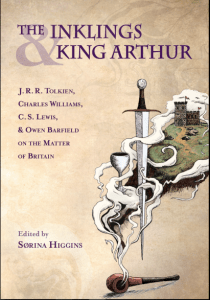
I loved this piece by Prof Moore, written in conjunction with the publication of The Inklings and King Arthur, and I warmly recommend it to you as well. And the essay on Chesterton and King Arthur is worth reading too, as I did in the past week.

Brenton Dickieson's avatarA Pilgrim in Narnia

While in the light of Charles Huttar’s contribution last week I should be extra careful to avoid any ‘historicist’ Providentialism, I can’t help thinking this week’s contribution is more than just another serendipity. J. Cameron Moore not only directs our attention to someone beloved of, and influential upon, various of the Inklings–the great controversialist, G.K. Chesterton. But, complementing Charles Huttar’s contribution, turns to Chesterton’s treatment of Arthur in relation to history, myth … and locality. We should remember that ‘Warnie’ Lewis considered Chesterton’s “Ballad of the White Horse” to be “the very best ballad I ever came across in my life” – and so we see Chesterton (thus famously the ‘balladeer’ of King Alfred the Great)  as Chesteron the Arthurian.

David Llewellyn Dodds, Guest Editor


At first glance, Chesterton’s fiction seems quite different from the Arthurian-infused mythos of the Inklings.  Chesterton has no independent mythical geography that draws from Arthurian legend…

View original post 1,646 more words