The Mercy and the Justice of the King of Gondor

It is the task of kings to be the chief among the judges of the people. All law is administered in the king’s name from the most trivial of cases in the most remote of villages to the weightiest of matters in the greatest city of the land. And most important of all the people must know that the king will always act according to the ancient customs of the land and will be not partial to any and most certainly not to himself and his own interests. The 1662 Book of Common Prayer of the Church of England prays that the council of the monarch may “indifferently minister justice”. C.S Lewis once asked an uneducated member of the Headington congregation of which they were both part what he thought was meant by indifferent justice. The context of the question was that the proposal that indifferent should be replaced by impartial as people would understand it better. The man thought for a moment about Lewis’s question and then replied, “It means making no difference between one and another.” Lewis was satisfied that no revision was required and whenever I have prayed the general intercession in the service of Holy Communion I have always used the version written for the 1662 Prayerbook.

So it is that one of the first tasks that Aragorn has to undertake as king is the minister justice to all in the time between the end of Denethor and his own crowning. In part this means the treatment of the peoples who had been allies of Mordor. Among them are the Easterlings and the peoples of Harad. Aragorn chooses not to punish them and he gives the slaves of Sauron, who readers will remember that Gandalf pitied, land that they can call their own.

At last he has one particularly difficult case to judge. Beregond of the Guard of the Citadel in Minas Tirith had defied the orders of Denethor to aid him in his suicide and in the slaying of Faramir. If Gandalf had not arrived in time Beregond would have been faced with the choice of whether or not he should strike his lord in order to save Faramir but thankfully he was spared that. Nevertheless he slew two fellow members of the Guard and justice has to be done.

“Beregond, by your sword blood was spilled in the Hallows, where that is forbidden. Also you left your post without leave of Lord or of Captain. For these things, of old, death was the penalty.”

Aragorn remits the penalty “for your valour in battle, and still more because all that you did was for love of the  Lord Faramir.”

Note that Aragorn does not forgive Beregond. He remains guilty of the crime that he committed. Remission is not forgiveness but the decision of the judge not to carry out the penalty for a crime. But even though the reasons for the crime have mitigated it a crime has been committed. The king must declare the punishment.

“You must leave the Guard of the Citadel, and you must go forth from the City of Minas Tirith… You are appointed to the White Company, the Guard of Faramir, Prince of Ithilien, and you shall be its captain and dwell in Emyn Arnen in honour and peace, and in the service of him for whom you risked all, to save him from death.”

Tolkien tells us that Beregond perceived the “mercy and justice of the King”. Mercy alone could not suffice. Beregond could only hold his head high by atoning for his deeds. All are satisfied that the law has been respected and all are satisfied that Beregond’s brave deeds have been respected. Perhaps too all may begin to come to terms with the sad and tragic death of Denethor knowing that a man had to commit a crime in order to save Faramir from his despair.

Aragorn begins his reign with an act of wisdom, and soon all the land will hear of this and their faith in the King and of the new life of their land will deepen. They have a king once most and he is a man of justice and of mercy.

The Inklings & King Arthur Roundtable

This is one of the most exciting and important broadcasts that you will hear. Read my comment on Sorina Higgins’ site to see why I think so and listen to the discussion by clicking this link.

Sørina Higgins's avatarThe Oddest Inkling

This past Monday, Signum University hosted a Signum Symposium roundtable discussion celebrating the release of The Inklings and King Arthur. You can watch the recording of the event here:

Promo for the Book: 

Will King Arthur ever return to England? He already has.

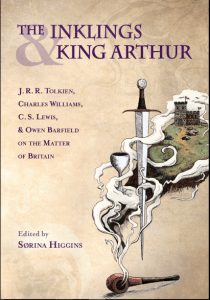
In the midst of war-torn Britain, King Arthur returned in the writings of the Oxford Inklings. Learn how J. R. R. Tolkien, C. S. Lewis, Charles Williams, and Owen Barfield brought hope to their times and our own in their Arthurian literature. Although studies of the “Oxford Inklings” abound, astonishingly enough, none has yet examined their great body of Arthurian work. Yet each of these major writers tackled serious and relevant questions about government, gender, violence, imperialism, secularism, and spirituality through their stories of the Quest for the Holy Grail.

This rigorous and sophisticated volume of studies does so for the first time. It is edited by…

View original post 681 more words

The Return of the King

Last week we read about the failure of Númenor and the line of Stewards in Gondor that at its best kept the memory of Númenor and the faithfulness of the House of Elendil alive but eventually came to believe more in the memory than the reality. Memories are safer than realities. You can make of them what you will and your remembering can allow you to keep things as they are and not to change. So it is that we are reminded of Denethor’s words to Gandalf, “I would have things as they were”.

What capacity we all have for self deception! “Things as they were” in Gondor meant a dying land even without the invasion of Mordor. Legolas saw it and said, “The houses are dead, and there is too little here that grows and is glad”. When Denethor wished for things as they were all he really meant was that he would remain in power. What he really mourned was his own loss of control or prestige.

Faramir believes in the reality and so welcomes the king when he returns. At the moment when Gandalf crowns Aragorn, thus fulfilling the mission given to him by the Valar, Faramir cries out, “Behold the King!” He tells his people that the true king stands before them in flesh and blood with wisdom upon his brow, strength and healing in his hands, and a light about him. If any still long for the past then they are commanded to change. This is the kind of change that is meant in the word metanoia in the bible, the word that is usually translated as repentance. A new reality has come and we must change.

Tolkien goes on to tell us how everything does change.

“In his time the City was made more fair than it had ever been, even in the days of its first glory… and all was healed and made good”.

You would think that everyone would be glad to see this change, and I believe that thanks to Faramir’s leadership most people did, but I suspect that some longed for “the good old days” of the ruling Stewards.

When the true king rules everything is healed and becomes fruitful. This is a fundamental principle. In Gondor this means that gardens grew again and children were born and flourished. When King Energy is at work within us then our lives become ordered without being rigid, fruitful without being overgrown and we live and work in a kind of flow, of blessing, both for ourselves and for others.

Moore and Gillette put it this way in their seminal study of the masculine archetypes and psyche, King, Warrior, Magician, Lover.

This is the energy that expresses itself through a man when he takes the necessary financial and psychological steps to ensure that his wife and children prosper. This is the energy that encourages his wife when she decides to go back to school to become a lawyer… This is the energy that expresses itself through you when you are able to keep your cool when everyone else in the meeting is losing theirs… This is the energy that seeks peace and stability, orderly growth and nurturing for all people- and not only for all people but for the environment, the natural world. The King cares for the whole realm and is the steward of nature as well as of human society.”

This is what Aragorn is. It is what Faramir is too. You don’t have to be the boss in order to display King Energy. You can display it in service of another. I have a favourite movie, The Intern, in which a character played by Robert de Niro displays King Energy in lavish quantity as an enabler of others in a very humble role. Try and watch it and you will see what I mean. Actually the one in true authority is always aware of being a servant. In the prayers for the Queen in the Church of England we say this, “that she, knowing whose minister she is, may seek thy honour and glory”. It is only those who know that they are a servant who are able to be trusted with authority over others who can bring life-giving order, fruitfulness and blessing to them.

Dale Nelson on an “Easy to Read” Modern Arthurian Epic

As regular readers of my blog will know I am reblogging posts from Brenton Dickieson’s excellent blog on C.S Lewis and matters related to the Inklings, A Pilgrim in Narnia. These posts have been requested to help promote the recent publication of The Inklings and King Arthur, a book that I am currently reading and know will be a resource for years to come.
This week’s post is by Dale Nelson and is about Martin Skinner’s long poem, The Return of Arthur. As you will see it is a trenchant critique of contemporary society that remains fascinatingly contemporary despite being written in the 1950s.

Brenton Dickieson's avatarA Pilgrim in Narnia

Two years after his Arthurian novel, That Hideous Strength, was published, and a year before he was discussing Arthur’s multiple “disqualifications” to be a “hero” with Dorothy L. Sayers, Lewis did not allow the complexities of his thoughts about King Arthur to prevent him heartily recommending to a young poet friend that he put Arthur at the heart of a new epic. Dale Nelson, whose acquaintance I happily made thanks to this blog, tells us about it in a way that will probably send the second-hand sales of this work I had never heard of before sky-rocketing.

David Llewellyn Dodds, Guest Editor


Did you ever daydream about taking time to live away from modern light, traffic, and noise, like a medieval monk?

Martyn Skinner (1906-1993) was, with Alan Griffiths and Hugh Waterman, one of three young Englishmen who, in 1930, undertook the fascinating experiment in quasi-medieval living in a…

View original post 1,699 more words

Aragorn Commands The Steward of Gondor, “Do now thy office!”

It was in the year 2050 of the Third Age that Eärnur, the last king of Gondor, rode to Minas Morgul in answer to the challenge of the Witch-King, the Lord of the Nazgûl. No tale was ever told of a battle between them but Eärnur was never seen again. He had no heir but the people of Gondor chose not to make a member of another family their king but to wait for the king’s return. They chose a Steward to govern them “to hold rod and rule in the name of the king, until he shall return”.

A thousand years passed before the War of the Ring and the downfall of Sauron during which the Stewards of the line of Mardil did their office. In all but name they were kings of Gondor but they never sat upon the throne or wore the crown. Tolkien remarks that although “some remembered the ancient line of the north”, the descendants of Elendil and Isildur of the kingdom of Arnor, the Ruling Stewards “hardened their hearts” against a true return of the king. Denethor may have told Boromir that only in places of “less royalty” could a steward have claimed the throne but as we saw in his last days he regarded Aragorn as an upstart. At the end of his life he cried out to Gandalf, “I will not bow down to such a one, last of a ragged house long bereft of lordship and dignity”.

Faramir saw things differently. It was one of the many ways in which he was divided from his father. Faramir may have been tutored by Gandalf, just as Aragorn was, but Gandalf could only teach him because he was already captured by the story of Númenor. There were effectively two stories of Númenor. Perhaps there are always these stories in every human enterprise. One was the story of the desire for power and a growing bitterness about everything that constrained them. At last all the bitterness about these constraints was concentrated upon anger about mortality and about the divinities, the Valar, who seemed to hold life unjustly as a private possession. The Valar, the governors or stewards of Earth on behalf of Illuvatar, the One, became through this belief as no more in the eyes of the kings of Númenor than rivals for power. Sadly this was the story that Denethor nourished in his heart and why he ended his life in despair and denial.

The other story, the story to which both Faramir and Aragorn gave their loyalty, was to Númenor as a gift. The first families of Men who wandered across the mountains into Beleriand in the First Age were befriended by and allied themselves to the Elves in the wars against Morgoth and the darkness. It was because of their faithfulness in those wars that they were given Númenor as a gift. So friendship and faithfulness lay at the heart of this other story and a submission also to the mystery of mortality. While the later kings of Númenor became embittered by this mystery, Elendil the Elf-friend and his followers chose to accept the mystery of mortality as a gift just as Númenor’s separation from the Undying Lands was also a gift.

We live in times in which the limitation of mortality is resented even as it was by Ar-Pharazôn, the last king of Númenor. Recently Elon Musk, the CEO of Tesla, argued that humans can only remain “economically viable” as cyborgs while Ray Kurzweil, the director of engineering at Google, argues for human immortality by digital means believing that it will be a possibility by the 2030s. The philosopher, John Gray, describes these immortalizers as “the God-builders”.

Who is faithful to the true story of Númenor, the mystery of mortality, as a gift, as Aragorn and Faramir are? Who awaits the coming of the true king? It is because Faramir nourished his longing for the return of the king in his heart that on the great day when Aragorn comes to Minas Tirith to claim the crown that he is willing to be a true steward and to lay his ruling authority down. It is because of his faithfulness that renewal comes to Gondor.

“Do now thy office!”

‘The Name is Against Them’: C.S. Lewis and the Problem of Arthur by Gabriel Schenk

Once again I am reblogging an essay in the series being published in association with the launch of The Inklings and King Arthur on Brenton Dickieson’s website, A Pilgrim in Narnia, and guest edited by David Llewellyn Dodds.
This week’s essay is by Gabriel Schenk and deals with the problem of Arthur within the Arthurian myth. Reading this excellent piece of work has stimulated so much questioning within me. I wonder what questions it might raise for you.

Brenton Dickieson's avatarA Pilgrim in Narnia

What a delight and relief it is to give something entrusted to your responsibility, out of your hands, step back – and see it prosper. In this case, the Oxford C.S. Lewis Society, which has gone from strength to strength since the last of my three years as its President, some quarter-century ago. An example of which vitality is Dr. Gabriel Schenk’s post today, which began life as a paper read to the ‘Lewis Soc’, and which deepens our attention to That Hideous Strength last week with a wide, rich context in the thought of Lewis – and Dorothy L. Sayers – about King Arthur.

David Llewellyn Dodds, Guest Editor


British Library MS Additional 59678, fol. 35r (detail)

At sixteen, C.S. Lewis declared Malory’s Morte Darthur “the greatest thing I’ve ever read.” He was surprised by how much he’d liked it:

“I had no idea that the Arthurian legends…

View original post 1,686 more words

Éowyn and Faramir Declare Their Love as Éowyn Understands her Heart at Last

Éowyn receives her brother’s invitation to join the triumph at the Field of Cormallen after the fall of Sauron but she does not go. Once more the Warden of the Houses of Healing becomes anxious about her unhappiness and bids Faramir take time from his duties as Steward of Gondor to speak with her.

Faramir is a man of wise insight and he has learned much from the day he spent with Merry and so he says to her plainly:

“You do not go because only your brother called for you, and to look on the Lord Aragorn, Elendil’s heir, in his triumph would now bring you no joy. Or because I do not go, and you desire still to be near me. And maybe for both these reasons, and you yourself cannot choose between them. Éowyn, do you not love me, or will you not?”

In March 1941 Tolkien wrote a remarkable letter to his son, Michael, on the subject of marriage and relations between men and women. It is remarkable partly because it displays a closeness between father and son that is sadly very rare. Also because of its depth of insight. I think that most men on reading this letter would would wish they had enjoyed this closeness with their own father or that they could achieve it with their sons. Richard Rohr describes the general poverty of relations between fathers and sons as “The Father Wound”. Faramir has known this wound deeply but Tolkien, who never knew his own father shows that it need not be passed on to the next generation .

In the letter Tolkien writes about the Western romantic idea of courtly love in which a great lady would enjoy the devotion and admiration of young men, often expressed through poetry or deeds that would prove their love. A physical expression of the love was considered unacceptable although the two great Arthurian love stories of Guinevere and Lancelot and of Tristan and Isolde show that such relationships could move disastrously from the idealised form to the physical form. In his letter Tolkien also notes that to idealise a woman, to grant her some kind of divinity, does her no good at all. Tolkien describes this as “false and at best make believe. The woman is another fallen human being with a soul in peril.”

I refer to this, partly because I believe it to be Éowyn’s temptation. She desired the adoration of the greatest knight of his age and, with it, the adoration of all men and women. I also wonder if Faramir was tempted to idealise Éowyn. “Were you the blissful Queen of Gondor, still I would love you.” Perhaps not, perhaps Faramir simply feels that he has to declare his love with as much passion as he can to make Éowyn see it. Thankfully for his own sake he never has to know what it would be like to love the Queen of Gondor without hope! Éowyn sees reality at last or, as Tolkien puts it so beautifully, “the heart of Éowyn changed, or else at last she understood it”.

It is only possible to love flesh and blood although such love always points us beyond itself towards divine love which we glimpse in the temptation to idealise. Tolkien puts this powerfully in his letter. Every marriage, in a certain sense he writes, is a mistake. We could all find “more suitable mates”. It is possible to spend a whole lifetime either looking for the perfect mate or saying, “if only”. And we will never know. Even the best of marriages requires self-denial, perseverance and forgiveness. They require the decision to say the greatest, Yes, to reality, to the real person in front of us. I know that it has become popular to create our own wedding vows, as if by doing so we give the wedding ceremony more authenticity, but I become more deeply impressed by the vows of the old English Sarum Rite which is over five hundred years old and in which each person promises to “love and to cherish” for better for worse, for richer for poorer, in sickness and in health, till death us do part”. Both Éowyn and Faramir have to renounce some kind of idealised form of romantic love and commit themselves to the real person in front of them.

A Personal Reflection on Logres and The Matter of Britain by Stephen Winter

This week’s post on the series on The Inklings and King Arthur is by me. It is an attempt to link the wisdom of the Inklings, the Matter of Britain and the current state of my country and of Europe. I would love to engage in conversation with anyone who wants to discuss this so please read and comment.
You may notice a reference to a poet, priest and scholar who refers to Jesus as “Our True Strider”. This is in fact, Malcolm Guite, who contributed the wonderful concluding essay to the book, The Inklings and King Arthur. Glad to make that correction!

Brenton Dickieson's avatarA Pilgrim in Narnia

Having sent out the call for papers, it is delightful to be more a ‘receiving’ than a ‘commissioning editor’, discovering what serendipities Providence supplies. We began last week with Suzanne Bray’s illuminating study of ‘Post-Inklings’ Arthurian fiction of as recently as twenty years ago – in the context of an argument around a century older, and the contributions to it of the first Inkling Arthurian novelist, Charles Williams. Now, Stephen Winter complements this by taking us back to the last Arthurian novel by an Inkling, C.S. Lewis’s The Hideous Strength, to show how one of its most striking features addresses our contemporary situation even more forcefully than it did Lewis’s own, when he wrote it seventy-four years ago. Join us, to contemplate “our haunting”.

David Llewellyn Dodds, Guest Editor


It may feel, for the inhabitants of the British Isles, that recent years have been particularly unsettled. The referendum…

View original post 1,037 more words

The Eagles of Manwë Praise the Faithfulness of the People of Minas Tirith.

Last week I promised to continue the love story of Faramir and Éowyn but I ask you to permit me to make you wait one week more before we return to it. Last week we thought about the great wave that seemed to threaten the end of all things and yet brought a joy that was both entirely unlooked for and which brought tears to those who were pierced by it. Now all the people in the city learn what has brought such joy for,

“Before the Sun had fallen far from the noon out of the East there came a great Eagle flying, and he brought tidings beyond hope from the Lords of the West, crying:

Sing now, ye people of the Tower of Anor, for the Realm of Sauron is ended for ever, and the Dark Tower is thrown down.”

I hope that discerning readers will have noticed that Tolkien is careful about the use of capital letters for nouns in his work. In an earlier post on this blog we saw it in his use of the word, Pity, and so here Tolkien uses it to draw our attention to the importance of the noun that is capitalised. In the sentence that I quoted above there are four nouns that receive a capital letter, a sign that this is a sentence of particular importance, but the one that I want to focus on is the word, Eagle.

This is no ordinary Eagle. For one thing the Eagle sings in human speech and comes to Minas Tirith as the herald of the free peoples of Middle-earth. For another this Eagle was one of those who came to the climactic battle before the Black Gate. This Eagle is a descendant of those that Manwë, the lord of the Valar, sent to Middle-earth in the First Age to be his messengers. Their task was to keep watch on Morgoth, who was Sauron’s lord, and to do this they built their eyries on the peak of Thangorodrim itself, the very mountain beneath which Morgoth built his fortress of Angband.

They have kept their watch faithfully through long ages and from time to time, at crucial moments, they have intervened directly in the affairs of the free peoples. They carried Beren and Lúthien from Angband, the party of Thorin’s dwarves from the trees in which they were trapped by orcs and wargs, Gandalf from the Tower of Orthanc when he was held captive by Saruman and later carried him from the mountain top after the great battle with the Balrog and finally they attacked the Nazgûl at the Battle of the Black Gate.

It is thus no coincidence that it is an Eagle of Manwë that is the herald of the fall of Sauron. The faithfulness of the Eagles speaks to the faithfulness of Minas Tirith.

Sing and rejoice, ye people of the Tower of Guard, for your watch hath not been in vain.”

Just as the armies of the West were drawn into the story of Frodo and Sam at the Field of Cormallen so that it became their story too so all who have remained in the city as the host went to battle are brought into the story of the faithful vigil of the ages. The boys who play with Bergil, son of Beregond of the Guard of the Tower, the women who Ioreth of the Houses of Healing tells of the first coming of the king to his city, all become part of the story of the faithful watch.

The 16th century English theologian, Richard Hooker, once wrote, “How are the people to know they are faithful unless their captains tell them?” Faithfulness will lie at the very heart of the civilisation that is born with the downfall of Sauron and the return of the King and the story of faithfulness with which the new age begins will dignify every man, woman and child to whom the captains tell it. It is this act of giving dignity to the people that is one of the central tasks of the captain whether a parent, teacher, chief executive, president or king. Any who fail in this task are not true captains.


The Argument Continues: Late 20th Century Christian and Pagan Depictions of Arthur and the Grail by Suzanne Bray

Dear friends,
In coming weeks I intend to reblog this series of short essays, edited by David Llewellyn Dodds, and appearing originally on Brenton Dickieson’s wonderful site, A Pilgrim in Narnia. My own copy of “The Inklings and King Arthur” arrived yesterday and my hope is that my readers will enjoy both this series of celebratory essays and will also want to buy the book. One of the essays will be by me and I also hope to include a review of The Inklings and King Arthur later on at the conclusion of the series.
If you read my comment on this excellent essay by Suzanne Bray then you will note my belief that a careful study of The Inklings is not just a matter of literary interest for people “who like that kind of thing” but is essential. We are now significantly nearer to the possibility of the kind of world that C.S Lewis described prophetically in “That Hideous Strength” than we were when he wrote it. Soon we will all have to choose sides, Logres or Britain, St Anne’s or the N.I.C.E, Aslan or Jadis, Christmas and Springtime or an eternal winter.
Please look out for these essays on Fridays on my site or find the originals on Brenton Dickieson’s earlier in the week.
Under the Mercy,
Stephen Winter

Brenton Dickieson's avatarA Pilgrim in Narnia

I’m pleased to offer the first of our guest bloggers in the Inklings and Arthur series celebrating the links between the Oxford Inklings and the Matter of Britain. This series is in concert with the new collection, The Inklings and King Arthur, edited by Sørina Higgins. The book has topped a number of Amazon sales lists and the kindle version was released this week. This series will include some of the authors of the collection, including Suzanne Bray, Professor of British Literature and Civilisation at Lille Catholic University in the north of France. She has written extensively in French and English about C.S. Lewis, Charles Williams, Dorothy L. Sayers and other 20th-century Anglican authors.

David Llewellyn Dodds, Guest Editor


In my article for The Inklings and King Arthur, I point out that Charles Williams’s presentation of the Holy Grail, both in his Arthurian poetry and in the…

View original post 1,713 more words