Whose Side is Treebeard on?

Whose side is Treebeard on in the War of the Ring? That is another way of asking the question, whose side is nature on? Treebeard himself is undecided. “I am not altogether on anyone’s side because nobody is altogether on my side, if you understand me: nobody cares for the woods as I care for them, not even Elves nowadays.”

Treebeard is on the side of the forests of the earth and since time immemorial he has been their shepherd. And what he has witnessed over the years has been the long slow defeat of the forest. Even the hobbits have not been on the side of the forest. You may remember how Merry  told his companions of the battle between his people, the Brandybucks, and the Old Forest early in their journey; of how fires had been lit by the Brandybucks to drive the forest back and a great hedge planted to withstand any further attempts at encroachment. You may remember too, how the Old Forest tried to trap the hobbits as they attempted to journey through it by forcing them down to the Withywindle and the clutches of Old Man Willow. The Forest had a long and bitter memory of Merry’s people and only the arrival of Tom Bombadil saved him and his friends from disaster and a speedy conclusion to the great Quest of the Ring. The Old Forest was not on their side.

And there is a sense in which even Treebeard’s world is divided against itself because the Ents, the shepherds of the wild forest, have long been separated from the Entwives, the tenders of the cultivated gardens of the world. In this world the untamed wilderness is the masculine principle, the animus, while the cultivated world is the feminine principle, the anima and as Treebeard says to Merry and Pippin, the Entwives “would like your country.”

Tolkien never answers the question of whether the wilderness and the garden, the masculine and the feminine, can ever live in peace together although he does seem to say that the final healing of the world will only come when they are finally reconciled. But one thing is sure and that is “there are some things, of course, whose side” Treebeard is “altogether not on… these Orcs and their masters.” For Saruman the wizard has betrayed the trust bestowed upon him by the Valar, the angelic lords of the earth, the task he was given to aid the free peoples of Middle Earth in their resistance to Sauron and that he has long been plotting “to become a Power”. Treebeard declares that Saruman has “a mind of metal and wheels; and he does not care for growing things, except as far as they serve him for the moment.”

And in saying this Treebeard challenges us to declare whose side we are on in the War of the Ring, whether we, like Saruman, use growing things for our own purposes, plotting to become little powers. Whether we, like Saruman, have given way to despair, believing in the inevitable victory of the dark lords of our own times, seeking only to find some accommodation with them, some way of surviving in a world that they rule. If we do then we will find that all who become, or seek to become, dark lords will have little regard for our loyalty seeking only their own ends and we will find something else too. Nature will be against us and will have its revenge upon the dark lords and all who for their own ends choose to be their allies. In our own time we are already rousing the anger of nature and would do well to find a way to make peace before it is too late.
On Learning How to Receive Good Gifts

With long but steady strides Treebeard takes Merry and Pippin on a long journey across the Fangorn Forest but at its ending they are in a safe place for the first time since leaving Lothlorien. They are in Wellinghall at the foot of the Misty Mountains, one of Treebeard’s dwelling places in the forest. “I like it,” he says. “We will stay here tonight.”

Treebeard gives Merry and Pippin a drink very like the water of the Entwash that they had drunk earlier that day near the borders of the forest after escaping the orcs and Tolkien tells us that the water had “some scent or savour in it which they could not describe: it was faint, but it reminded them of the smell of a distant wood borne from afar by a cool breeze at night.” Tolkien seems to have had a particular love for this kind of description. He hints at what it is that his characters remember. They are “reminded” of the smell and the wood is “distant” and its savour “borne from afar”. Later in his description of Aragorn’s use of athelas to heal those who have been wounded in the Houses of Healing after the Battle of The Pelennor Fields he uses it in a particularly poignant manner. Instead of a simple and straightforward description of the properties of the herb or of the drink he evokes the memory of a sensation, a memory that lies hidden at the edge of consciousness. In the case of Aragorn’s use of athelas this is especially striking. When he uses it to bathe Frodo’s wound after the attack at Weathertop we are simply told that “the fragrance of the steam was refreshing, and those that were unhurt felt their minds calmed and cleared.” In the Houses of Healing Tolkien again hints at memories that are evoked by the effect of the steam. It is as if the memory, mingled with the working upon the senses of the aroma of the herb crushed in warm water and the hands of the true king, achieves the healing of body and soul and spirit together.


Here it is not so much healing that is achieved. That came about if you remember when the hobbits drank of the streams of the Entwash earlier that day. Here Merry and Pippin find refreshment and nourishment but what refreshment; what nourishment! Later their friends will observe that they have grown in stature and other hobbits will find them almost intimidating.

Image


What a journey they have been upon since their capture by the orcs and Pippin’s unhappy description of himself as “a nuisance: a passenger, a piece of luggage”. They have been through a kind of initiation together and now they are warriors and ready for battle. There is nothing that they have done which has brought about this transformation except their refusal to give up and their total loyalty to their friends and to the quest even though all seems hopeless. Later this will be described as a “gentle loyalty” thus distinguishing it from the fierce loyalty of battle hardened members of the Fellowship like Gimli or Legolas, but it is loyalty nonetheless. In Tolkien’s Christian understanding of such things no gift can be described as a payment to honour a contractual obligation. The hobbits did not encounter Treebeard or drink “of the draughts of Fangorn” as their due wage for loyalty. But without that loyalty no gift could have been received. The same is true for us. It is by means of our commitment to the good that we, like Merry and Pippin, will be capable of receiving gifts that will transform us.

Learning to See as an Ent Sees

In meeting Treebeard Merry and Pippin are introduced to a wholly different way of seeing the world and living in it. Ents may not be trees but they think like trees and if trees could speak (and for all I know they do) they might speak as Ents do.

We do not say anything in Old Entish, says Treebeard, “unless it is worth taking a long time to say, and to listen to.” In other words we are being invited to look at reality through the eyes of a creature who never rushes and who takes a very long term view of everything and to imagine what life might be like if we were to see it as he does. For there is no doubt that Treebeard would see us as very “hasty” folk indeed. He would be horrified to see us only plant trees that will mature at great speed and then be cut down to feed our need for timber. And if he were horrified by that he would be even more horrified by our daily destruction of the forests of the world and the endless steady transformation of our planet into a vast desert. He might look at our behaviour and conclude that in actual fact the orcs had won the War of the Ring and that a new Dark Lord had indeed arisen wielding something that was very much like the One Ring, if not worse. We may remember that there were times when Sauron took on the appearance of a benevolent lord. Perhaps he would know how to use words like freedom as a cloak for his true purposes but now with the possibility of real and everlasting power he needs cloaks no longer. At the time of The Lord of the Rings he is revealed as he truly is.

Thankfully Sauron and his lesser ally, Saruman, overlook the Ents. It is not that they do not know of their existence but that they discount them as they weigh up who their most dangerous opponents might be. As far as they are concerned Ents are too slow, just like the trolls made by Morgoth in mockery of them, to be a real threat. But as we shall see they have dangerously miscalculated. Evil always discounts that which does not seem to threaten it on its own terms. Evil will always say, as Stalin said of the Pope, “How many divisions does he have?” Maybe it will be those who learn to see like Ents or Hobbits who will prove to be our most doughty champions.

“I can see and hear (and smell and feel) a great deal from this a-lalla-lalla-rumba-kamanda-lind-or-burume. Excuse me: that is part of my name for it; I do not know what the word is in the outside languages: you know this thing we are on, where I stand and look out on fine mornings and think about the Sun, and the grass beyond the wood, and the horses, and the clouds, and the unfolding of the world…”

“Hill?” suggested Pippin. “Shelf? Step?” suggested Merry.

Treebeard repeated the words thoughtfully. “Hill. Yes, that was it. But it is a hasty word for a thing that has stood here ever since this part of the world was shaped.”


What would it be like to learn how to Name things as Ents do? We won’t even begin to know the answer to that question unless we learn to take time to look at things. When we look at something as an Ent does then we might begin to learn its long story and to learn to tell it ourselves.

Perhaps we might learn to see through the eyes of that great prophet, William Blake, in his “Auguries of Innocence..”

“To see a World in a grain of sand, And a heaven in a wild flower, Hold infinity in the palm of your hand, And eternity in an hour.”

A Hobbit’s Guide to Synchronicity

Free at last from their orc captors Merry and Pippin run deeper into Fangorn Forest along the line of the Entwash as quickly as the tangled forest will allow until they reach a steep hill with what appears to be a kind of natural stair cut into its side. They can see the sun shining upon the hill top and keen to get some kind of idea of where they are and to enjoy the sun they decide to climb the stair.

“Up we go!” said Merry joyfully. “Now for a breath of air and a sight of the land!”

Image

And so they arrive in time to encounter Treebeard, the oldest of the Ents who are the shepherds of the trees of the forest, an encounter that will change the direction of the whole story. And we might be forgiven for thinking that Tolkien has given way here to one of those rather lazy “just in time” moments, an unlikely coincidence, except for the fact that he believed that such moments do happen. Tolkien believed in Providence and you may remember that Gandalf once said to Frodo that Bilbo was meant to find the Ring and therefore that Frodo was meant to have it too.

For some, like me, who believe in Providence as did Tolkien, it might be enough to have a sense that there is an unseen hand for good at work in the world. Gandalf calls this “an encouraging thought” and it is for those of us who believe in it. I am struck that some normally sceptical people are prepared to believe in Adam Smith’s “invisible hand” of the Market, forgetting perhaps that as well as being an economist Smith was also a moral theologian. I know too that in the 20th century, Carl Gustav Jung developed the idea of Synchronicity, arguing that as well as events being linked by cause and effect they could also be linked by meaning and that in the search for meaning a skilled therapist might help someone look for events that appeared to be coincidences. More recently, Joseph Jaworski, founder of the American Leadership Forum, wrote a book of the same name as a reflection on his own experience as he sought to move from a self-centred and inauthentic life to one that was consciously meaningful and of service to others. The book argues that once we begin the search for meaning in our lives events will, in a sense, conspire to aid us in that search. In his excellent foreword to the book Peter Senge speaks of the essential importance of commitment if we are to live a life that will be shaped, as it were, by synchronous events.

Image

As we saw last week we might find Pippin scratching his head and smiling ruefully if we were to try and explain this to him. He is unlikely to engage in the kind of search for meaning that we have talked about. But Pippin and Merry know about commitment and have practiced it ever since they decided that they would go with Frodo and Sam when they left The Shire carrying the Ring with them. Gandalf knew about their commitment  too and persuaded Elrond that he should trust their friendship as being of more importance to the success of the Quest of the Ring than the presence in the Fellowship of two trusted members of his household. Merry and Pippin may have thought of themselves as being a nuisance, mere luggage on the journey, but it is their friendship, their total commitment to Frodo, that brings them, carried as it were by the orcs, to the story changing encounter with Treebeard that we will think about in the next few weeks. I wonder where the events of your life might be carrying you?


Peregrine Took’s Guide to Life

There is a clue in the words that Pippin speaks that we considered last week to the way in which he will deal with the feeling of uselessness. “I wish I could get free!” he says to himself.

If we were to read a hobbits’ guide to Life, some kind of self-help manual or at least if we were to read a self-help manual as written by Peregrine Took we would find little reflection upon a search for meaning. It is not that Pippin is incapable of reflection and later in the story we will come across a particularly moving conversation that he and Merry have together about what they have learned upon their travels but on the whole Pippin is not given to much introspection or much forethought for that matter. Sometimes this will get him into trouble but at this moment it is a source of strength to him because he is able to give all of his attention to the matter at hand. How is he to get to free?

And from the moment that he moves from asking questions to which he has no answer to the moment when he and Merry step into the Forest of Fangorn, free from their Orc captors but with no idea of what to do next except that they know that they would rather face the Forest than the Orcs this is how Pippin will deal with every challenge that he has to face. He will not ask himself whether he has the capacity to escape from the orcs he will simply deal with one thing at a time. And as he does so his confidence in his capacity to face each challenge will grow.

At times when life seems to overwhelm us it might actually be Pippin who can help us through. He won’t be able to help us make sense of the bigger questions like, “why is this happening to me?” or “why does God allow suffering in the world?” If you were to ask him a question like that he would probably say something like, “You had better ask Gandalf or Elrond. I don’t think I could help you on that one. Let’s go and find something to eat!” Pippin does not spend too much time speculating. He gets on with the task that lies to hand and saves his energy for the next task and then the next one too. Key to being able to do this is staying cheerful and Merry and Pippin put a lot of effort into that task. When they make a joke and Ugluk tries to terrify them into silence by threatening them with the terror that lies ahead of them they pay little attention to him. They will deal with the terror when they get to it with as much courage as they can. They won’t waste what energy they have by being afraid of it now.

This reminds me of the spirituality of the boy who offers his lunch as an answer to the question “How are we to feed all these people?” in the story of the Feeding of the Five Thousand. He does not seem to be worried by the problem as the disciples are. He simply offers what he has. Pippin would approve! And at those times when we seem to be confronted by problems that are too big for us to solve then we might do the same: we might simply offer what we have. 

What Good Have I Been- the fear of being useless

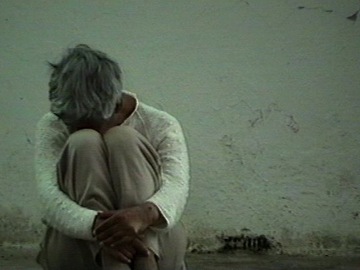
Pippin wakes up in a vision of hell as the prisoner of the orcs and a voice of condemnation cries out against him.

“I wish Gandalf had never persuaded Elrond to let us come,” he thought. “What good have I been? Just a nuisance: a passenger, a piece of luggage. And now I have been stolen and I am just a piece of luggage for the Orcs. I hope Strider or someone will come and claim us! But ought I to hope for it? Won’t that throw out all the plans? I wish I could get free!”

Of course the voice of condemnation is in his own head and that is where such voices always sound the loudest. Throughout the journey the young hobbits have been surrounded by intent and capability. Aragorn, Gandalf, Boromir, Legolas and Gimli are all battle-hardened warriors. Frodo and Sam share the task that must be fulfilled, the destruction of the Ring. But Merry and Pippin have no skill as warriors and no great task to fulfill. All they have brought with them is their loyal friendship. At this moment the gift they have offered since the unmasking of the conspiracy at the cottage at Crickhollow in The Shire seems to have very little value. They have simply been a nuisance and they have always been “looked after”.

As I speak to those who are growing older one of the things that strikes me is that this fear of being “a nuisance: a passenger, a piece of luggage” is one of the greatest of all their fears. Perhaps we carry that fear with us all through our lives. Only at one time in my life did I ever stand in the Dole Queue but it remains a powerful memory. At that moment I felt useless. The bus station in my town was just opposite the office where I had to sign on and each time I got off the bus I would take a walk around the streets for a few moments so that no one would see me walk straight from the bus in order to join the queue. I remember too the feeling of relief when I got work as a day labourer with an employment agency. No work felt too demeaning. I was paying my way, making my contribution to the household of which I was a part. Even now as I work freelance and find my work to be profoundly fulfilling there is a part of me that still seeks to keep the feeling of uselessness at bay. Will I be content and at peace in my old age? It is a discipline, the discipline of delight that I am still seeking to learn though I pray for it each day.

Next week we will think about what Merry and Pippin, the luggage of the Orcs, seek to do in their misery. The clue lies in the last phrase of the quotation of Pippin’s speech: “I wish I could get free!” But this week I invite you to share in their misery. Not in order to wallow in it but in order to examine yourself, becoming aware of the voices of condemnation that shout loudest in you, perhaps of your own fear of being “useless”. Image