I Will Wait in Silence

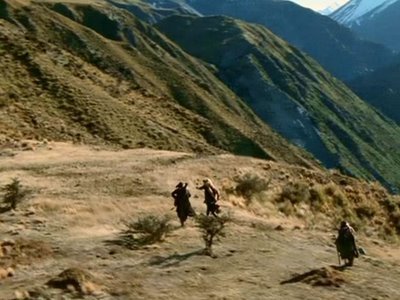
“The trumpets sounded. The horses reared and neighed. Spear clashed on shield. Then the king raised his hand, and with a rush like the sudden onset of a great wind the last host of Rohan rode thundering into the West.

Far over the plain Eowyn saw the glitter of their spears, as she stood still, alone before the doors of the silent house.”

And so the host of Rohan rides to do battle with the forces of Isengard. Gandalf has roused Théoden, King of Rohan from his slow decline and with Aragorn, Gimli and Legolas, he rides with them upon Shadowfax, mightiest of all horses in Middle Earth. Brave words have been spoken; courage has been roused in the hearts of the Riders; but Tolkien does not end this chapter with the sound of horses’ hooves or the sound of the wind in the ears of the riders but with silence before the doors of Meduseld as we stand with Eowyn as she gazes after them.

The silence that ends the chapter is intentional. We are meant to stay in a space that is almost empty. The action is taking place somewhere else and we wait alone. Not for us the comforting sound of the thunderous gallop of horses to keep our courage up. We must be brave in a silence that is an absence of sound and an emptiness that is an absence of the people that we love. And there is a fear also that the silence will end with the harsh cries of orcs as they advance upon us.

It is this kind of waiting that has been the lot of women in time of war throughout the ages. I remember speaking once with an elderly woman in the cottage in which she had been born and had lived in throughout her life as she described to me the day when her father had walked down the garden path to go to war in France in the autumn of 1914. For her that memory was as vivid and fresh as if she had just lived it and I could feel the warm autumn sun and see the closing of the gate as he walked down the village lane as she told her story. What I cannot remember is whether he ever came home again.

Tolkien was himself one of the young men who left for war in that same conflict. He did come home but lived the rest of his life with the memory. He never made his writings a vehicle for his memories but his experience of war shapes each page of The Lord of the Rings as they must have shaped the life that he lived after that experience.

Tolkien was never a propagandist but a story teller. In propaganda it is the message that is of prime importance. All experience must be reduced to the message. Each story must be flattened and simplified. Propaganda cannot allow complexity because to allow this is a betrayal of the purity of the message. Robert Runcie was Archbishop of Canterbury between 1980 and 1991 and had served as a tank commander during the Second World War, winning the Military Cross for bravery in action. Later in life he described how his tank had destroyed a German tank and how he and his men had gone to check for survivors in it. There were none and he told how as he looked at the faces of the dead men he suddenly saw them as sons, husbands, boyfriends; that there were people waiting for them who would never see them again. Such a story cannot be used by a propagandist and Runcie was no friend to propagandists during his time in office as Archbishop. Story will always leave the reader or hearer to choose how to respond, shaping lives that grow in sympathy and compassion and not reducing them to cartoon automata. Propaganda only wants automata who will do the bidding of the propagandist.

The Dark Lord is Afraid of the Dark

Last week I tweeted the link to my Blog “The Darkness Shall be the Light” and then became anxious. What if people should think that I was a supporter of Sauron, the Dark Lord himself? Surely this would be the kind of slogan that either he or his lord, Morgoth, might use? And so I rapidly typed in the words, “And I don’t mean Sauron!” into my Tweet. But after sending it I began to think. Why should I not mean Sauron? For Sauron would try to twist anything to his own purpose, even light itself. Readers of this Blog will know that I have thought of Morgoth’s hunger for light, a story that Tolkien told in The Silmarillion, on a number of occasions. Tolkien tells how Morgoth destroyed the Trees of Light with the aid of the monstrous spider like creature, Ungoliant, and later how he stole the Silmarils, jewels made by Feanor that captured the light of the Trees, and placed them in his iron crown even though they caused him torment. Thus the relationship between Morgoth and his followers, Sauron foremost among them, is ambiguous and contradictory from the start. And how could it be otherwise? For Morgoth and Sauron desire that which will expose them and leave them vulnerable and will also remind them for ever of the blessed state that they have rejected in favour of their own desire for power over others.

And there is one thing more that struck me as I considered this. Sauron fears the very thing that he uses as a weapon against others. He does not delight in the dark as I might delight in a scene of great beauty like the view from a hill top. He can only use something. He cannot delight in it. For delight is the enjoyment of something or someone for their own sake. I do not seek to own the view that lies before me and even if I did I do not think that it could give me more pleasure than it does. Sauron can never think like this. He is only capable of thinking in terms of usefulness and especially in terms of how he can use something in order to gain more power over others. Long experience has taught him that he can use darkness as an instrument of fear, that by cloaking himself he can suggest to others that his power is greater than it truly is. He seeks to blot out the light of the sun in order to weaken the resolve of those who would resist him and yet he knows that should he fail what awaits him is endless night and he fears that above all. Sauron, the Dark Lord, is afraid of the dark, he is afraid of death.

And this makes him different from the members of the Fellowship of the Ring. They too fear the dark and yet they love the light more and for the sake of the light they will journey down dark roads, facing their own fear and overcoming it. It is because of the dark journeys that they themselves have taken that Gandalf and Aragorn are able to bring Théoden out of his dark places into the light and then onwards into battle with little hope first against Saruman and then the Dark Lord himself. They teach Théoden that beyond all nights there is a dawn and that at the ending of this world of shadows there is the True Dawn.

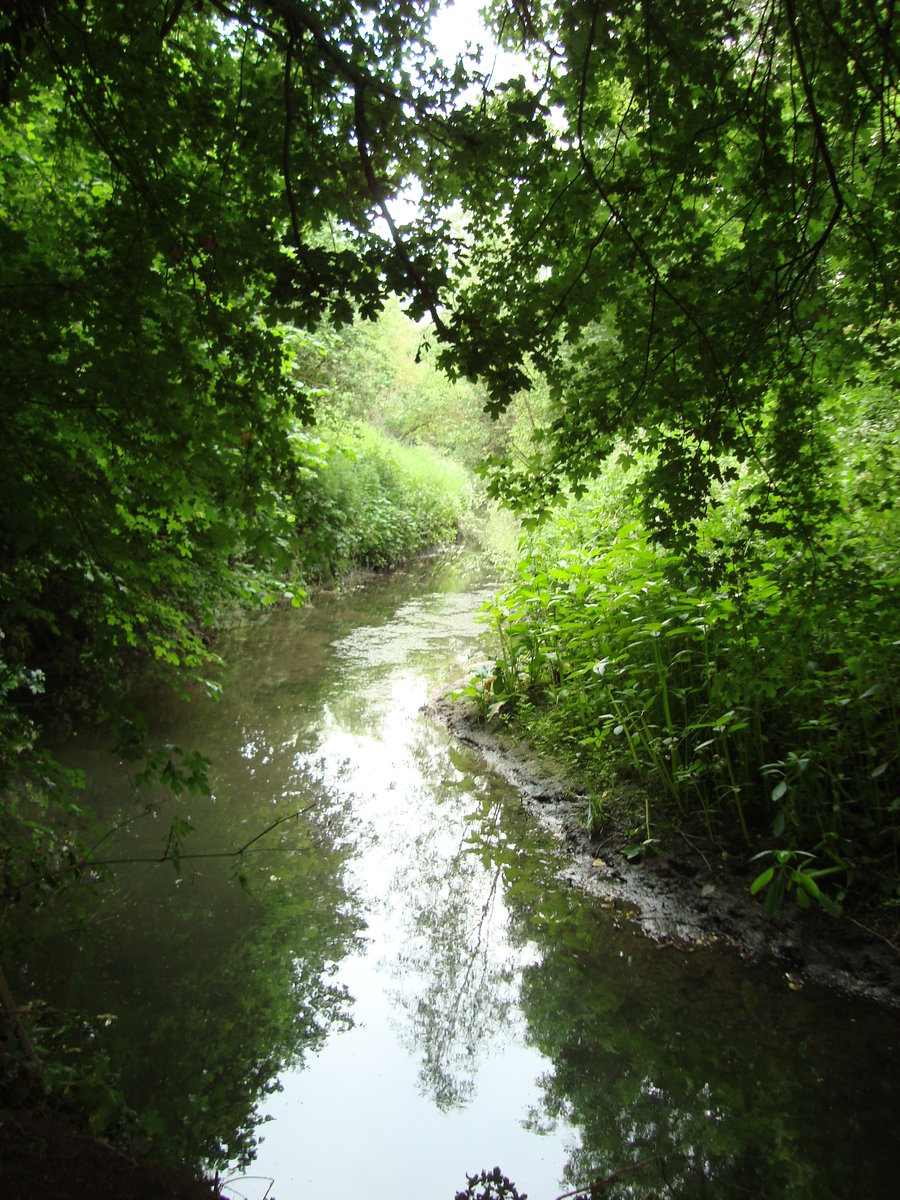
Near my home there is a woodland with two streams running through it that join at its heart. Last year in the dark months I did not venture into it except in the daylight. This year I have decided to make a daily journey in it to the point where the streams join a spiritual exercise. I want to make my own dark journey through the woods. It is only a journey of a couple of hundred yards but each day I leave the known way of the path that runs past the woods and step into them into sudden and deeper dark. I realise that I am reliant on my memory of familiar points along my way and also the feel of the ground beneath my feet. There is a narrow path through the woods though it is not distinct enough for me to be able to see it, even at my feet. I rely on making out the difference between feel of the trodden down ground of the path and the softer ground that lies to either side of it beneath my boots. At present I am concentrating on the physical experience. How it feels not to be able to see, the moments of anxiety when I miss my way, and the excitement and relief when I meet the joining of the streams or clasp a great beech tree that tells me that I am near the end of my own dark journey. Eventually I would like to develop a form of prayer that will make the experience more consciously my own and help me to open my self to whatever gifts this place and the walk through it at this dark time of the year might be awaiting me. Most of all I seek the dawn that come only through journeying through the dark of the night. Maybe I will meet and overcome the monsters in my own psyche. Maybe I will journey through my own sense of loss and the death of my hopes as Aragorn does.

The Darkness Shall Be The Light

I have not written this Blog since Easter. My silence began because I was invited to give a series of talks in a church near by that took up all my creative energy at that time. I don’t know if it was the talks that took away the energy, or their subject matter, or something that was going on inside me at that time and since, or a combination of all three, but I have not done much by way of creative work since that time. In the next few weeks I will be leading a couple of days entitled “Our Wounds are Our Teachers”. The title comes from Richard Rohr, an American Franciscan. Much of the most helpful material, to me at least, comes from Bill Plotkin’s “Soulcraft” and especially the chapter, “The Darkness Shall Be The Light”. Perhaps it is a testimony to this new work (both inner and outer) that I am able to write again.

This Blog has been an attempt to read J.R.R Tolkien’s great work, “The Lord of the Rings” as a source of wisdom and to share what I find there. When I last wrote I was standing with Théoden, Gandalf, Aragorn, Gimli and Legolas in the rain outside the Golden Hall of Meduseld in Edoras. The rain was washing away the cloying dust of Théoden’s long imprisonment, both within his own hall and within the darkness of his own soul. His liberators had come to him with a power born of their own dark journeys. Gandalf the Grey, the secret pilgrim, was now clothed in white, his true greatness revealed at last, after his battle with the Balrog of Moria and his journey through death itself. Aragorn, the true King of Gondor and Arnor, as he reveals himself to Eomer and to Hama at Théoden’s door, has passed through his own sense of failure at the breaking of the Fellowship, the death of Boromir and the capture of Merry and Pippin by Orcs. He abandons the Quest of the Ring in order, as he believes at the time, to lay down his life in a hopeless attempt to free the young hobbits. Gimli and Legolas have been his faithful companions in this attempt and together they stand with a power that they have not known before.

For Gandalf, Aragorn, Gimli and Legolas, their Dark Journeys have truly been their light and now they can share this with Théoden and his people who rise from darkness and despair by their aid to go to war with Saruman at Helms Deep. In our imaginations we go with them in that journey to war against the lords of darkness and despair. In our lives it may be that we are better able to stand with others in their dark journeys so that they too can discover that these journeys have been givers of light even as we discover that our own dark journeys are the greatest source of light in our own lives.

A Life as Brief as a Sparrow’s Flight

As Gandalf, Aragorn, Legolas and Gimli approach Edoras, the dwelling place of Théoden, King of Rohan and the Rohirrim they ponder the story of that people. Five hundred years the Rohirrim have dwelt in that land since first Eorl the Young led them to the field of Celebrant to aid the people of Gondor in battle. To them that day is so long ago that they have no memory of what came before but to Legolas, ageless wood elf of the Greenwood, those five hundred fallings of the leaves seem “but a little while.” And so Tolkien calls to mind another of the great themes of his stories, the great difference between elves and humankind. The sorrow of being human is to know the brevity of life; the sorrow of being an elf is not themselves to know death and yet to know the decay and loss of all else that lies about them.

Aragorn, who served Théoden’s father, Thengel, at one time in his youth, sings one of the songs of the Rohirrim in their own tongue. Legolas, not knowing the tongue, speaks of it as “laden with the sadness of Mortal Men.”

Where now the horse and the rider? Where is the horn that was blowing? Where is the helm and the hauberk, and the bright hair flowing?…Who shall gather the smoke of the dead wood burning, Or behold the flowing years from the Sea returning?”

It is the image of the vain attempt to gather up the smoke of the fire that is most poignant in the song reminding us that we, who are mortal, can no more hold onto life than to perform this impossible task.

Tolkien was one of the greatest scholars of early English of his time and surely here he recalls the famous speech recounted by the Venerable Bede in his Ecclesiastical History of the English People in which the pagan priest, Coifi, addresses Edwin, mighty king of the Northumbrians. Paulinus has just declared the Christian message to the king and Coifi speaks.

“It seems to me that the life of a man on earth is like the swift flight of a single sparrow through the hall, where you, O King, sit at table on a winter’s day with your captains and counsellors. In the midst of the hall there is a comforting fire to warm it. Outside the storms of winter rain and snow are raging. This sparrow flies swiftly in through one window of that hall and out through another. While he is inside, the bird is safe from the winter storms, but after a few moments of comfort, he vanishes from sight into the wintry world from which he came. So man appears upon earth for a little while- but of what went before this life, or what follows, we know nothing.”

I first heard this story as a young boy and this image seared itself into my consciousness. I could see the hall of the king, the fire burning brightly, the winter storm blowing outside. I could see the bird flying swiftly from one window to another. And at some level, perhaps beyond understanding, I knew that life was short, so heartbreakingly short.

When Gandalf and his companions arrive at Meduseld, the hall of the king, they find the Rohirrim, bowed down under the weight of this consciousness and unmanned by the whisperings of Grima Wormtongue, secret servant of Saruman. But soon the people of Rohan will be woken to new hope and to brave deeds. They will find such meaning in their brief life that they will be able to stand against all the powers of darkness that now oppress them.

But that is for another week…

You Are Our Captain

How wonderful it is to be able to find clarity and purpose after long doubt and uncertainty. We have followed Aragorn through doubt until his choice to follow Merry and Pippin brought him serenity even when all seemed lost and it seemed that the best he could achieve was to find the young hobbits and then starve with them in the forest. He had found a peace but it was the peace of someone who had given all that they could but who must now lay down their struggle and their life. It was the peace that someone finds when all hope is gone but there remains the knowledge that the choice was right and that is now enough.

“Come Aragorn, son of Arathorn!” says Gandalf. “Do not regret your choice in the valley of the Emyn Muil, nor call it a vain pursuit. You chose amid doubts the path that seemed right: the choice was just and it has been rewarded. For so we have met in time who otherwise might have met too late.”

How wonderful it is to find clarity after long doubt and so it is for Aragorn as he meets Gandalf once more after long night. How wonderful it is to hear this well done from one he has long thought of as father. And at this moment, although he has laboured long and hard, he has energy for any task to which he might be called, indeed he longs to receive orders again.

“The quest of your companions is over. Your next journey is marked by your given word. You must go to Edoras and seek out Théoden in his hall. For you are needed.”

Saruman is now in open war against Rohan. He fears that Théoden might possess the Ring now that his messengers have been slain by Eomer’s war band? Aragorn must aid Théoden in this fight. All weariness falls from him.

“You are our captain and our banner,” he declares to Gandalf. “The Dark Lord has Nine. But we have One, mightier than they: the White Rider. He has passed through fire and the abyss, and they shall fear him. We will go where he leads.”

Most men unless they have passed over into despair will feel the thrill of these words for most of us long for a true captain to follow. Sadly many pass through life having never found that captain or, even more tragically, to have found one who seemed to be what we sought but who has proved faithless. The faithless captain is one who seeks their own gain above all else and who will sacrifice others to that end. Aragorn knows that Gandalf is not faithless and he will not rest until the struggle is ended being willing to sacrifice himself for the sake of those who follow him. Men love such leaders and will follow them through thick and thin if they can find them.

Ernest Shackleton, a Faithful Captain

It is a lonely moment when we realise that unless we are prepared to be the leader the task will not be done. It is a lonely moment when we realise that unless we make the sacrifice then there will be a company of people who cannot be free. To have a sense that what we do has meaning and truth sets us free. “How are the people to know that they are faithful” wrote Anglican theologian, Richard Hooker in the sixteenth century, “unless their captains tell them?” Gandalf has told Aragorn that he has proved faithful and now he has strength to fight. How much we need such captains. Perhaps we have been called to be such a captain to a company of people ourselves.

On Learning to Receive Good News

It can almost be as hard to receive and believe unexpected good news as it is to receive and believe the opposite. Disappointment can become a habit of life and preparing for it so that we can bear it when it comes can become the main discipline of our inner lives. The expectation of disappointment and our preparation for its “inevitable” arrival has a way of creeping into every fibre of our being. We will see this negative expectation at work in two major characters of The Lord of the Rings in later postings on this blog. One is Théoden of Rohan and the other is Denethor of Gondor.

The return of Gandalf is one of the glorious moments of the whole story. We saw him fall with the Balrog into the abyss in Moria, crying, “Fly, you fools!” as he did so. We shared in the grief of his companions at his loss and in the sense that their task had become so much harder if not impossible. We have reflected more than once on how for Aragorn the unexpected burden of the leadership of the company threw him into doubt regarding his personal ambitions. And we could say that although it was the attack of the orcs that finally sundered the Fellowship of the Ring that it was from the fall of Gandalf that such a sundering became inevitable.

And now in the Forest of Fangorn as Aragorn, Legolas and Gimli bravely pursue what seems a hopeless cause, Gandalf returns to them.

“They all gazed at him. His hair was white as snow in the sunshine; and gleaming white was his robe; the eyes under his deep brows were bright, piercing as the rays of the sun; power was in his hand. Between wonder, joy and fear they stood and found no words to say.”

They are able to receive this good news with joy and then to continue their journey with renewed hope. Soon they will know that there is no point in continuing to search for Merry and Pippin. They will waste no time on comments like, “so why did we bother, then?” Only one thing will matter to them and that will be to do the next task, and then the next one and the next one. In this they differ from Théoden (at first at least) and from Denethor. Denethor, most of all, has become so set in his belief that good days are only pauses on the inevitable road to destruction that he considers all who continue to have hope as fools and so Gandalf is dismissively called the “grey fool”. In Théoden despair is mixed with guilt. He regards himself as a failed king. Aragorn is different from both. He has passed through his time of despair, not even regarding his own failure as something that disqualifies him from doing the next task with all the strength that he can bring to it.

Dietrich Bonhoeffer, German pastor, theologian and anti-Nazi resister, wrote powerfully about this not long before he was arrested and held in the Tegel prison in Berlin.

He reflected on ten years of resistance to the Third Reich within Germany, much of which had been ineffective, and upon all that he and his fellow resisters had learnt through those years. He wrote that he had learnt that it was of no importance whether anyone emerged as a hero from this experience. All that mattered was to keep on asking the question, day after day after day, “How is the next generation to live?” Aragorn has stopped worrying about whether he is a hero or whether others see him as one. All that matters is the task. Once that is clear to him he has no barrier within himself to weeping tears of sorrow or of joy and no barrier to living a faithful life.

Choice and Serenity: A Lesson from Aragorn

It is some weeks since this blog reflected upon the adventures of Aragorn, Gimli and Legolas, and their pursuit of the captors of Merry and Pippin across the wide plains of Rohan. It has been longer still since we thought about Aragorn’s inner turmoils after the fall of Gandalf; how he was torn between his longing to go to Minas Tirith with Boromir to aid its people in the wars against Mordor and his sense of responsibility to Frodo, the Ringbearer. I wrote about the day when Aragorn ran uselessly here and there as Boromir first tried to sieze the Ring from Frodo and then fell alone in battle trying to protect Merry and Pippin from the orcs of Isengard.

I wrote about the moment when he crashed through the trees into the glade, wielding the mighty sword of his glorious ancestors that had cut the Ring from the hand of Sauron, crying “Elendil”  he did so and finding that the battle was already at an end. At that moment Aragorn was in despair. http://www.stephenwinter.net/page6.htm#140191

“This is a bitter end. Now the Company is all in ruin. It is I that have failed. Vain was Gandalf’s trust in me. What shall I do now?”

The choice that he makes at that moment is one that takes him away, both from the Quest of the Ring and from his longing to fulfill the promise to Boromir to go to Minas Tirith. He chooses to follow Merry and Pippin, the two members of the Company, who, until that point in the story, have contributed least to their task. Any utilitarian assessment of the greatest good at the moment when he makes his choice would tell him that regretably he must abandon Merry and Pippin to their fate and that at least their deaths might be worthwhile if the Ring can be destroyed and Minas Tirith be delivered. But Aragorn is no utilitarian and neither is he a soft-hearted or, might we say, soft-headed sentimentalist. He chooses to trust Frodo’s choice to go on alone knowing that the Council have entrusted him with the task of destroying the Ring. And he cannot go to Minas Tirith having abandoned his comrades. He will follow them even if the pursuit is in vain.

In one sense the pursuit, though heroic, is indeed in vain. It is not through his efforts that Merry and Pippin are freed. It is not Aragorn who rouses the Ents to march upon Isengard. At one point Legolas remarks that they have made this great journey to little purpose and as they journey further into Fangorn Forest Gimli is even more blunt.

“If we do not find them soon, we shall be of no use to them, except to sit down beside them, and show our friendship but starving together.”

Yet Aragorn is serene through all this. “If that is indeed all we can do,” he says, “then we must do that. Let us go on.”

Aragorn has made his choice and once made he will waste no time upon regret. He has done all that needs to be done. We might say that there is some providential link, a synchronicity, between his choice and all the great events that will follow. We might say that if we choose rightly then good things will follow even if we cannot prove a direct link between our choice and the subsequent good. But we cannot prove such a link and Aragorn would not wish to attempt such a proof. He would regard this as an attempt at self-justification and a craven act to which he would never stoop. That is his greatness and the reason why Legolas and Gimli will go with him. And if we would know the peace that Aragorn knows then we too will seek only to make the right choice and then to act upon without regret.

Living a Life that is Too Big for Us

It was a year ago, after trying to write a book about The Lord of the Rings for the best part of a couple of years and basically getting nowhere, that I discovered that although I did not seem capable of writing a thousand words a day and constructing whole chapters I could write 500-700 words each week and post it as a Blog. This isn’t a boast on my part but I seem to be able to construct what would be a weekly column if I were writing for a newspaper. And so that is what I have been doing ever since that time. I have been journeying with Frodo Baggins and his companions all the way from Bilbo Baggins’s Birthday Party till Merry and Pippin’s encounter with Treebeard in the Forest of Fangorn after their escape from the Orcs and as I have done so I have written a weekly reflection on each section that I have read. I have not tried to be scholarly. I am just someone who has been reading this great work since being introduced to it by my schoolmate, Jon Flint, when I was about 14 or 15 years old. That is over forty years now and I feel that I have something to say about a book that I have loved ever since that time. I share J.R.R Tolkien’s Christian faith although not his Roman Catholicism. Like Tolkien’s great friend and collaborator, C.S Lewis, I am an Anglican.

Reading The Lord of the Rings slowly and thoughtfully has been a rich experience and I hope that I have managed to convey some of that in my weekly blogs. I have been especially caught up with the hobbits who find themselves in a story that is too big for them. And although they grow with the story they can never become heroic figures like Aragorn or Boromir. All they can do is to offer what they can the best they can. There are some in the story who have great discernment and see this offer as a deed of great worth. Faramir of Gondor is one and so is Treebeard of Fangorn who allows Merry and Pippin to lead him into an adventure that is likely to end with the destruction of the Ents. Come to think of it, both of them allow themselves to be carried into stories too big for them as well.

If there is a Christmas message in this (and I hope you won’t mind me for looking for one at this season) then it is the idea of a God who chooses to come among us and to commit himself to the same experience that we know, living a life that is too big for us and yet doing it with faithfulness, joy and love.

If you want to look at any of my earlier blogs from December 2012 to October 2013 you will find a complete archive on my website http://www.stephenwinter.net/page6.htm and whatever you do over the Feast of the Nativity may you do it with joy and delight.

On Learning How to Receive Good Gifts

With long but steady strides Treebeard takes Merry and Pippin on a long journey across the Fangorn Forest but at its ending they are in a safe place for the first time since leaving Lothlorien. They are in Wellinghall at the foot of the Misty Mountains, one of Treebeard’s dwelling places in the forest. “I like it,” he says. “We will stay here tonight.”

Treebeard gives Merry and Pippin a drink very like the water of the Entwash that they had drunk earlier that day near the borders of the forest after escaping the orcs and Tolkien tells us that the water had “some scent or savour in it which they could not describe: it was faint, but it reminded them of the smell of a distant wood borne from afar by a cool breeze at night.” Tolkien seems to have had a particular love for this kind of description. He hints at what it is that his characters remember. They are “reminded” of the smell and the wood is “distant” and its savour “borne from afar”. Later in his description of Aragorn’s use of athelas to heal those who have been wounded in the Houses of Healing after the Battle of The Pelennor Fields he uses it in a particularly poignant manner. Instead of a simple and straightforward description of the properties of the herb or of the drink he evokes the memory of a sensation, a memory that lies hidden at the edge of consciousness. In the case of Aragorn’s use of athelas this is especially striking. When he uses it to bathe Frodo’s wound after the attack at Weathertop we are simply told that “the fragrance of the steam was refreshing, and those that were unhurt felt their minds calmed and cleared.” In the Houses of Healing Tolkien again hints at memories that are evoked by the effect of the steam. It is as if the memory, mingled with the working upon the senses of the aroma of the herb crushed in warm water and the hands of the true king, achieves the healing of body and soul and spirit together.


Here it is not so much healing that is achieved. That came about if you remember when the hobbits drank of the streams of the Entwash earlier that day. Here Merry and Pippin find refreshment and nourishment but what refreshment; what nourishment! Later their friends will observe that they have grown in stature and other hobbits will find them almost intimidating.

Image


What a journey they have been upon since their capture by the orcs and Pippin’s unhappy description of himself as “a nuisance: a passenger, a piece of luggage”. They have been through a kind of initiation together and now they are warriors and ready for battle. There is nothing that they have done which has brought about this transformation except their refusal to give up and their total loyalty to their friends and to the quest even though all seems hopeless. Later this will be described as a “gentle loyalty” thus distinguishing it from the fierce loyalty of battle hardened members of the Fellowship like Gimli or Legolas, but it is loyalty nonetheless. In Tolkien’s Christian understanding of such things no gift can be described as a payment to honour a contractual obligation. The hobbits did not encounter Treebeard or drink “of the draughts of Fangorn” as their due wage for loyalty. But without that loyalty no gift could have been received. The same is true for us. It is by means of our commitment to the good that we, like Merry and Pippin, will be capable of receiving gifts that will transform us.

The True Power and Majesty of Kings

As Aragorn journeys further and further away from Gondor, the place of his dream, on what seems to be the hopeless quest of rescuing Merry and Pippin from the orc host who have taken them prisoner, he encounters a war band of the Riders of Rohan riding homeward from the destruction of that very host. The war band are commanded by Eomer, nephew of Théoden, king of Rohan and against the orders of the king they have set out after the orcs on hearing of their incursion into Rohan. On meeting Aragorn, Legolas and Gimli they challenge them. Aragorn’s response to the challenge is astonishing. He invokes the name of his mighty ancestor, Elendil, the last and only king of the two kingdoms of Gondor and Arnor and then he continues:

“I am Aragorn, son of Arathorn, and am called Elessar, the Elfstone, Dunadan, the heir of Isildur Elendil’s son of Gondor. Here is the Sword that was Broken and is forged again! Will you aid me or thwart me? Choose swiftly!”

Aragorn has no more time for courtesies, however time honoured they might be. This is the true crisis, the moment of doom, of judgement, and courtesy is at such moments simply time wasting. Nor is there time for weighing up what choices might be available. Aragorn has given his command, “Choose swiftly!” and the command must be obeyed whether Eomer chooses for him or against him. Eomer is awestruck, but so are Gimli and Legolas who have travelled with him since Rivendell.

“They had not seen him in this mood before. He seemed to have grown in stature while Eomer had shrunk and in his living face they caught a brief vision of the power and majesty of the kings of stone. For a moment it seemed to Legolas that a white flame flickered on the brows of Aragorn like a shining crown.”

Readers may remember the “kings of stone”. We encountered them on the river journey down the Anduin from Lothlorien and they may remember that Aragorn gave his ancestors a lordly greeting and then seemed to shrink into himself in his boat. It was the time of doubting when Aragorn questioned his very identity. It was the time of his Wilderness Temptation but that time is now over. It may be that in his pursuit of Merry and Pippin Aragorn has had to lay aside his kingly ambition for a time. It may be that he will lay down his life in a vain pursuit. But he no longer does so as a man wracked with doubt. The choice he has made is a kingly choice, a free choice, and he will not be thwarted by any man.

Readers may also have noted that I have used words like “Wilderness Temptation” and “Emptying”. I might also have used the phrase, “The kingdom of heaven is at hand.” The witness of the gospels and of the letters of the New Testament to Jesus the King resound with the same language that, in The Lord of the Rings, bears witness to Aragorn, who will be king of Gondor and Arnor. It is not that Tolkien is making Aragorn into a kind of Jesus, but that this language,and the language of the New Testament, reveals true kingship to us; the language first of self doubt and of emptying, and the language also of command. Aragorn has revealed himself to all as their true king.

Choose swiftly! Are with me or against me? The time of judgement has come! The kingdom of heaven is at hand!