The Suffering of Faramir

Denethor has sent Faramir to the fords of Osgiliath so that he might try to hold them against the invaders for as long as possible. All remaining hope is pinned upon the arrival of the Rohirrim to raise the siege and Denethor hopes that in holding the outer defences of the Pelennor he can keep the hosts of Mordor from the walls of Minas Tirith itself and that the Rohirrim will not be divided from the defenders of the city.

That is Denethor’s hope but the invading force is too great in number for Faramir to withstand and soon they are in retreat and eventually the retreat becomes a rout. Only the action of Prince Imrahil of Dol Amroth, who turns back the attack, and of Gandalf, who withstands the Lord of the Nazgûl, saves the fleeing force from slaughter.

But for Faramir this comes too late. Even as the Nazgûl swerve aside Faramir is struck by a deadly dart and Imrahil carries him from the field of battle. Faramir is defeated and his life hangs by a thread.

Faramir has lain down his life for his friends, a line from the Gospel of John in which Jesus, on the night of his betrayal declares that “No one has greater love than this, to lay down ones life for one’s friends”. It is a phrase that Shakespeare takes up in the speech made by Henry V to his men before the Battle of Agincourt where the king calls them brothers “be he ne’er so vile”. Faramir has fallen at the head of his men seeking to ensure an orderly retreat. Imrahil declares to Denethor that Faramir has done “great deeds” but he has fallen and will play no more part in the war except to declare Aragorn, king, and then to wait.

I meet very few people who are able to wait well when their work is finally done. Often they rail against a loss of power and influence sometimes seeking to intervene when it is no longer appropriate that they should. They should have been ready to pass on a task or responsibility to another but they fail to do so. They may become angry at their apparent impotence and the lack of respect or gratitude that they feel they should receive from others and their anger may turn to bitterness or depression.

Faramir does not give way to this although he will come close to it and will need the intervention of the king in the Houses of Healing. But just as we thought of his Christlikeness in the laying down of his life for his people so too do we see him pass through dereliction on his road to healing and serenity. We are reminded of the words of Jesus on the cross, “My God, my God, why have you forsaken me?”

But why does Faramir’s dereliction end in life while Denethor’s ends in a despairing death? My conviction is that Faramir truly suffers. In saying that I use the word in its old sense of giving permission to something to happen, of believing that there is something that is bigger even than my death. Something that gives meaning to my death even if I do not know what it is. Ultimately Denethor’s death is a denial of suffering. He gives permission to nothing. Nothing has meaning. Faramir will awaken through the aid of the king and will serenely await the outcome of the final battle. If it ends with victory and the king returns he will lay down his office even as he was prepared to lay down his life. If it ends with defeat he will lead his people in a final defence of the city believing that this too will have meaning. One heart will be won entirely by the nobility of his patience but that is a story we must tell another time.

Gandalf Shows Us that the Greatest Wisdom is Learned Through Weakness and Suffering.

The Fords at Osgiliath are taken and its defenders, commanded by Faramir, are in full retreat back across the Pelennor Fields to Minas Tirith. Meanwhile Denethor awaits the end in his tower.

Pippin fears that the Dark Lord himself has come but Denethor replies with a bitter laugh:

“Nay, not yet Master Peregrin! He will not come save only to triumph over me when all is won. He uses others as his weapons. So do all great lords, if they are wise, Master Halfling. Or why should I sit here in my tower and think, and watch, and wait, spending even my sons?”

In recent weeks on this blog we have seen that Denethor is not the self-indulgent coward that Jackson portrays him to be in his films. He lives and eats austerely and even sleeps in his armour so that his body should not “grow soft and timid.” It is so important that we should take note of the way in which Tolkien describes him here so that we understand the full tragedy of his story. Denethor’s journey to despair is the fruit of his greatness not his weakness. To understand it in this way will teach us a profoundly wise self-awareness if we will allow it. There is a time in the first half of life in which we believe that we must eliminate our weakness and develop our strength. If we do that then we will achieve great things as Denethor does but there will come a time when we must learn to see that our strength has the capacity to bring us to disaster while our weaknesses, those qualities that we have pushed into the shadow that follows us, will teach us wisdom if we will allow them. In a powerful passage in his second letter to the Corinthians the mighty Paul speaks of an affliction that brings him low, that he prays will be taken away from him. Eventually God tells him that his power is made perfect in weakness. In many ways The Lord of the Rings is a story that displays that reality. It is not Denethor’s greatness that will bring down Sauron but Frodo’s weakness and Gandalf’s fool’s hope!

Gandalf recognises this. At one point Denethor taunts him with his weakness when Gandalf reveals that the captain of the armies of Mordor is none other the Witch King of Angmar, the Lord of the Nazgûl. “Then, Mithrandir, you have a foe to match you… For myself, I have long known who is the chief captain of the hosts of the Dark Tower. Is that all that you have returned to say? Or can it be that you have withdrawn because you are overmatched?”

Pippin is horrified! Denethor is accusing Gandalf of cowardice, of running away. How will Gandalf react? Will he strike out in anger? But Gandalf is no young hothead but has become one who has nothing left to defend. He has learned the wisdom of weakness choosing the life of a wandering pilgrim, sometimes driven from the doors of those from whom he seeks shelter, habitually bearing insults such as the one that Denethor hurls against him. He has learned a patient long-suffering and a deep pity for the suffering of others. And he knows that among all the foes that he has faced, greater even than the Balrog of Moria, the greatest is Sauron’s chief captain. It may be that when they meet he will be defeated but for Gandalf that matters far less than the future of Middle-earth. As Dietrich Bonhoeffer put it to fellow members of the resistance to Hitler, whether they emerged from the struggle as heroes mattered very little. What mattered was whether the coming generation would be able to live. That too is the wisdom of one who had learned through suffering and weakness.

The Boldness of the One Necessary Deed

For a few moments before they take what rest they can Gandalf and Pippin speak together of the debate with Denethor and Faramir. For Pippin the question that is uppermost in his mind is whether there is any hope for Frodo, any hope for any of them? Gandalf’s reply is to take Denethor’s words and to make them his own.

“There never was much hope,” he answered. “Just a fool’s hope, as I have been told.”

And even this hope, slender as it is, is shaken by news that Frodo and Sam seek to enter Mordor by way of Cirith Ungol and guided by Gollum.

But then Gandalf begins to give a little substance to his hope. The substance comprises two hobbits and their treacherous guide, a foolish hobbit gazing into the Seeing Stone of Orthanc drawn by his own curiosity, and a captain, “bold, determined, able to take his own counsel and dare great risks at need” who challenges Sauron in the very same stone. All are bold deeds, even that of Pippin’s foolish act but they amount to very little. Of themselves they will win no battles. Of themselves they cannot withstand the armies of Mordor.

But it is the boldness that exposes both Sauron’s desire and his fear. His desire we know. He desires the Ring and he desires the power that the Ring can bring him. We know that Sauron has become reduced to little more than the sum of his desire. He is no more than a bigger version of the hungry Gollum. “Eat fish every day!” When we saw that desire in Gollum we found it pathetic, even sadly laughable. Somehow when such desire is allied to power it seems to have a semblance of dignity but it is in essence the same thing, both entirely destructive and ultimately empty.

And because Sauron of his own prideful choice can see all reality only in terms of scale, “who or what is bigger or smaller than he is?”, he has a strange and fearful vulnerability. The foolish boldness of Frodo and Sam is something that does even enter his calculations. The Council of Elrond declared that at the very outset of Frodo’s mission. It is an action that is beneath even his contempt and certainly outside of his understanding. No one who possesses the Ring could possibly do so with the intention of not using it, even destroying it! This is the weakness that Frodo and Sam expose.

But there is also something that Aragorn’s boldness exposes and that is his fear. All things seek to hide from Sauron. Until now even Aragorn has done so. Now he challenges him face to face, the heir of Isildur displaying Narsil, the sword that once took the Ring from Sauron’s finger, reforged. This alone brings doubt into Sauron’s mind but it is connected to something else and that is to Pippin’s foolishness. Sauron has seen the face of a hobbit, associating it with the fall of Saruman. Does the heir of Isildur possess the Ring? And so he launches his attack just a little too soon.

What hope Gandalf can find in this remains slender. All that he can offer to Pippin at the end in response to Pippin’s anxiety about Gollum is one of those proverbs that can mean either one thing or another. You take your choice. But Gandalf takes his leave of Pippin with a firm “Good night!” and his determination is renewed.

Such boldness is what is meant by the story that Jesus told in the Gospels of the man who on finding the treasure in the field goes away and sells all that he has in order to buy the field. At that moment there remains no more place for calculation only for the deed. This does not mean that such recklessness becomes the determining principle for every action. There is a place for caution and for prudence especially when care for others is concerned but happy is the one who listens so carefully that they know that all caution must be set aside for the one necessary deed.


On Gandalf and His “Fool’s Hope”.

Denethor is right!

I never thought that I would be saying this but I seem to have no choice. In the last few weeks on this blog we have been thinking about the weaknesses in his character but especially in the debate following the piece I wrote entitled https://stephencwinter.com/2016/10/27/he-would-have-brought-me-a-mighty-gift-denethor-and-the-ring/ I was strongly challenged by The Joviator to rethink my view of Denethor. I do hope that you can read that debate and the excellent piece that The Joviator wrote on his own blog http://www.idiosophy.com/2016/11/denethor-as-tragic-hero/. I have decided to start by turning away from my own judgement of Denethor and to take what he says of Gandalf seriously. And if I decide still to follow Gandalf it will be for reasons entirely other than my judgement of Denethor’s motives.

“What then is your wisdom?” said Gandalf.

“Enough to perceive that there are two follies to avoid. To use this thing is perilous. At this hour, to send it in the hands of a witless halfling into the land of the Enemy himself, as you have done, and this son of mine, this is madness”

“And the Lord Denethor what would he have done?”

“Neither. But most surely not for any argument would he have set this thing at a hazard beyond all but a fool’s hope, risking our utter ruin, if the Enemy should recover what he lost.”

Let us set aside Denethor’s judgement of Frodo for the moment. It is precisely because Faramir did not judge Frodo to be witless but a figure of some greatness that he chose to aid his mission and not to bring him to Minas Tirith. But Denethor regards his son to be as foolish as Gandalf and so we cannot use our knowledge of Frodo as a defence for the course of action decided at the Council of Elrond. Frodo is as much involved in the fool’s hope as everyone else at the Council. If he is witless then so too are they.

In order to read The Lord of the Rings properly we need to agree with Denethor. Frodo’s mission is impossible. Even if the Fellowship had not been sundered at the Falls of Rauros and Aragorn and Boromir, Legolas and Gimli had been at Frodo’s side on the journey to Mount Doom it would have remained impossible. When Gandalf describes Cirith Ungol and the Morgul Vale as cursed places one is tempted to ask what other route he would have counselled Frodo to take? Each one would have been as impossible as the next and the likely outcome of all that the Ring would fall into Sauron’s hands.

And in order to read The Lord of the Rings properly we need to leave behind the heroic tale that Peter Jackson tells. There we see that “even the smallest” can be heroes and that is an inspiring thought. In his telling of the story it is the heroism of Frodo and perhaps even more of Sam that stands in contrast to the weakness of Faramir and the cowardice of Denethor. It is that heroism that is the axis upon the whole story turns and each character is judged by whether they support or oppose it.

Tolkien tells a story that is profoundly different and it recalls words that St Paul writes to the Corinthians in the New Testament when he says that “God foolishness is wiser than human wisdom and God’s weakness is stronger than human strength.” (1 Corinthians 1.25) The foolishness and weakness to which Paul points is the cross and the proclamation of the cross. The death that Jesus dies alone, betrayed, abandoned is a foolishness and a weakness that shapes all reality. Paul says it himself that Christ crucified is “the power of God and the Wisdom of God”.

The Lord of the Rings is set in a world that has not known the Gospel message of God becoming one of us. That is what makes it different from C.S Lewis’s Chronicles of Narnia in which Aslan is a participant in the stories. But it is a world that is shot through with the wisdom and power of which Paul speaks. In it we see that reality is shaped by the Cross. The Lord of the Rings knows it as Providence  showing that there is a hidden Power at work in the world greater than any other that meant Frodo to have the Ring. Gandalf’s Yes to this Providence is indeed a Fool’s Hope but I am on the side of his foolishness and against the wisdom of Denethor.


Gandalf Pities the Slaves of Sauron

There is a character in Tolkien’s legendarium who exercises a profound influence on The Lord of the Rings and yet is not mentioned there. She is Nienna and in The Silmarillion we read this of her.

“She is acquainted with grief and mourns for every wound that Arda has suffered in the marring of Melkor. So great was her sorrow, as the music unfolded, that her song turned to lamentation long before its end, and the sound of mourning was woven into the themes of the World before it began. But she does not weep for herself; and those who hearken to her learn pity, and endurance in hope.”

Chief among those who hearkened to her was a Maia whose name was Olórin. The Maiar are spirits who serve the Valar. Tragically the greatest in power among them is Sauron who served Melkor, who Fëanor named, Morgoth. But The Silmarillion tells us that:

“Wisest of the Maiar was Olórin… His ways took him often to the house of Nienna, and of her he learned pity and patience.”

It is when Aragorn, Legolas and Gimli encounter Gandalf, restored from death in the Forest of Fangorn, that Gandalf briefly reflects upon his name. “Many are my names in many countries: Mithrandir among the Elves, Tharkûn to the Dwarves; Olórin I was in my youth in the West that is forgotten, in the South Incanus, in the North Gandalf, to the East I go not.” So it is that we learn that Olórin is Gandalf and that he is the one who learned pity and patience from Nienna.

Immediately this brings to mind the conversation between Gandalf and Frodo at Bag End in the Shire when Frodo first learned how the Ring came to Bilbo and so to him. In fear and disgust Frodo cries out when he learns how Bilbo had spared Gollum’s life: “What a pity that Bilbo did not stab that vile creature, when he had a chance!”

Gandalf’s reply shows how well he had learned his lesson from the Lady Nienna.

“Pity? It was Pity that stayed his hand. Pity, and Mercy: not to strike without need. And he has been well rewarded, Frodo. Be sure that he took so little hurt from the evil, and escaped in the end, because he began his ownership of the Ring so. With Pity.”

And so we see the importance of spiritual formation in the lives of each one of us. Sadly the vital importance of this central element in our education is in danger of being lost because it has been long confused with religious practice and as such practice is in decline so too is spiritual formation. Of course good religious practice can lead to good spiritual formation but, as Simone Weil once perceptively pointed out, religious practice can only prepare us for faith, it isn’t faith itself. Wisely Tolkien speaks little of religious practice in his works even though he was a lifelong Catholic in every respect including his practice; and one of the conclusions that we might draw from this is that he gives precededence to Olórin/Gandalf’s inner life. How much we need teachers as Nienna was to Olórin and Olórin is to Frodo, to Aragorn, to Faramir, even to Pippin. Readers will remember that when Frodo first encountered Gollum he spoke aloud as if to someone who was not there, “But now that I see him I do pity him”. The one who was not there was Gandalf. Frodo had learned his lesson from his master.

Sadly, though, Denethor has not. And, of course, this proud man will call no one but himself, master. As Gandalf puts it, Denethor thinks “of Gondor only” and in thinking of Gondor he thinks of his own pride. In the Second Age the kings of Númenor came to see Sauron, not as an evil to be resisted, but as a rival to their own greatness. So it was that when Ar-Pharazôn the Golden, the last king of Númenor defeated Sauron, he was corrupted by the one he had conquered. Denethor’s spiritual formation has made him a disciple of Ar-Pharazôn and thus a short step from being a disciple of Sauron. Not so, Gandalf. He Pities even Sauron’s slaves.


“He Would Have Brought Me a Mighty Gift.” Denethor and the Ring.

Denethor sits with Faramir and Gandalf in his chamber with Pippin standing in attendance. Until now he has maintained a courteous front but in the presence of his son, the wrong son, the mask slips and both his anger, his resentment and his desire are displayed to all.

“Boromir was loyal to me and no wizard’s pupil. He would have remembered his father’s need, and would not have squandered what fortune gave. He would have brought me a mighty gift.”

With these words Denethor displays his lack of self-knowledge. He believes himself to be greater than the Ring. Lesser beings than himself may fear the Ring but he is not weak as they are. He is the Steward of Gondor and a true son of Númenor and the Ring holds no terror for such as he. And when Gandalf asks him what he would have done with the Ring Denethor replies:

“It should have been kept, hidden, hidden dark and deep. Not used, I say, unless at the uttermost end of need, but set beyond his grasp, save by a victory so final that what befell would not trouble us, being dead.”

So Denethor would use the Ring “at the uttermost end of need” and he judges that he above all others has the capacity to judge when that time has come. We have seen already that the Ring will twist the heart of even the strongest. Gandalf and Galadriel have both been offered it by Frodo and both have been sorely tempted to take it but both have resisted the temptation. Denethor does not even recognise this as a temptation. To him it would be a gift, an opportunity to be grasped by the bold and by those who are worthy to receive it. And he judges himself to be worthy.

Denethor has lived his life as one given to fantasy. In his fantasy he is the wise and benevolent lord of the West, the one who achieves the final victory over Sauron and all his allies, the one who receives the grateful thanks and submission of all free peoples, the one who rules over them in wisdom and might. In another post at a later date on this blog we will think more about Denethor and the Palantir but suffice to say on this occasion that Sauron, who sees all weakness in others but never their greatness, has fed this fantasy over many years. Indeed the very reason that Denethor has used the Palantir is because of this fantasy. Denethor believes himself to be strong enough to use it even as he believes himself strong enough to use the Ring. But his belief is a delusion. He has disastrously misjudged his own capacity.

True strength and true wisdom involves the capacity to judge these things aright. The strong know their weakness better than any. This is why Faramir does not take the Ring, either for himself or for Denethor and why Aragorn deems that he can challenge Sauron in the Palantir. Faramir knows that he could only take possession of the Ring by force against one weaker than himself and he will not dishonour himself and all that he holds dear by doing so. Not even his father’s specious argument of “uttermost need” could persuade him otherwise. On the other hand Aragorn is the heir of Elendil to whom the Palantir were given and so he judges that he has the right and the strength to use it. Denethor has neither the right nor the strength either to take the Ring nor use the Palantir. He recognises only that he has the opportunity and he misjudges his own strength. The end can only be disaster.

We must achieve wise self-knowledge if we are to act rightly and an essential part of this is to know our weakness. When we are given an honourable job to do then we should act with all boldness believing that we will be given strength to do it. This is why Frodo can take the Ring even though he is only too aware of his weakness. Denethor on the other hand does not and so Gandalf is glad that the Ring never fell within his grasp.


Father and Son: Denethor and Faramir

Dressed in the livery of the Tower of the Guard, Pippin is hardly noticed as he enters the Chamber with Faramir and Gandalf as they come to speak with Denethor. He stands behind Denethor’s chair as befits his servant and so he is able to watch Gandalf and Faramir as Faramir gives his report to his father.

As we have learnt in recent weeks, Pippin sees with his heart and soul when Faramir reveals that he has met Frodo and Sam Pippin looks at Gandalf’s hands, “white they seemed now and very old, and as he looked at them, suddenly with a thrill of fear Pippin knew that Gandalf, Gandalf himself, was troubled, even afraid.”

Gandalf is afraid, and we will think more about this in another post on this blog, but Denethor is angry. He is angry, even beside himself with rage, because Faramir has chosen, not to bring Frodo and the Ring to Minas Tirith but to allow him to continue his journey to Mordor. Faramir has chosen to disobey his father.

“I know you well. Ever your desire is to appear lordly and generous as a king of old, gracious, gentle.”

As far as Denethor is concerned, that which made Pippin’s heart goes out to Faramir in love is mere play acting. Faramir is playing the part of a gracious lord. We can imagine that from childhood Denethor delighted in his warrior son, Boromir giving him praise even though it was Faramir who was more like his father in wisdom and insight. Does this suggest that Denethor secretly despised his own qualities and wished that he had those that Boromir displayed? I think that it does. After all, when Aragorn served Denethor’s father, Ecthelion, in disguise under the name of Thorongil, Denethor was jealous of him. Aragorn too displayed the warrior qualities that Denethor aspired to.

Aspiring to certain qualities that he perceived himself as lacking, learning to despise the ones that he had, Denethor even comes to believe that Faramir is merely acting. Here too we can see that Denethor has learned, himself, how to play a part. He is the same age as Aragorn and yet he is an old man sitting in his chair in the tower. It is one thing to play a part in our youth. In order to make our way in life we may even have to present ourselves for a time in a manner that others will respect and, perhaps, even admire; but as we grow older and our energy diminishes the effort required to play our chosen part begins to take its toll. Our lives lose the joy and spontaneity that comes when we are freely our true selves. In place of that joyous freedom comes both hardness and anger. The anger is directed at all who seem to display, naturally, the qualities that we desire. And when that person is someone close to us, especially when that person is a son to an embittered father that anger goes very deep indeed.

We can see why in the face of such hostility Faramir turned to Gandalf as a father. In Gandalf Faramir saw one who said a, Yes, to his true self. Under Gandalf’s loving and approving gaze Faramir, just as Aragorn did, was able to grow into his true self and to flourish. That is what true fathering does. It is not that the son has to find a self that is acceptable to the father. That is what Denethor desired of his sons. To find an acceptable self is just as destructive of the true self, of what we might also term as the soul, as is the rebellious self.

That is why we probably need others to be fathers to our sons. Sometimes we are just too close to be able to give them the freedom that they need to flourish. Perhaps that is where the old wisdom of godfathers comes from. It is a wise father who knows when to give way to another to provide what he lacks.

Denethor cannot do that. He needs to control and so his unhappy relationship to his son will play itself out to its tragic conclusion. Of that need to control we will see more next week when we think of Denethor and the Ring.


Peregrin Took and Faramir of Gondor.

Few first meetings could be more dramatic. When Pippin first sees Faramir he is standing on the walls of Minas Tirith with Beregond looking over the unnaturally darkened fields beneath him towards the great river. Faramir is riding with four companions towards the city when they are attacked by five of the Nazgûl from the sky. Faramir is able to master his horse even amidst such terror but the others are not able to do so. They are thrown by their maddened horses who flee for their lives. Bravely, Faramir returns to aid his men but despite his courage all would have ended tragically had it not been for Gandalf’s intervention. Revealed in light, Gandalf rides to their aid and is able to drive the Nazgûl away and together all return safely to the city. Faramir’s men will never forget that he went back to them.

Pippin is among the crowd that greets the heroes calling out their names. He looks upon Faramir’s face and sees it as the face of “one who has been assailed by a great fear or anguish, but has mastered it and now is quiet”. He is reminded immediately of Boromir who he had always liked for his “lordly but kindly manner” but in Faramir he sees something more, “one of the Kings of Men born into a later time, but touched with the wisdom and sadness of the Elder Race” and his heart goes out to him. Pippin knows that Faramir is one that he would be prepared to followed even under the wings of the Nazgûl.

Last week we thought together about the great masculine archetypes of king, magician, warrior and lover and the role that they play in the journey towards wholeness and maturity. We saw that the least developed of these in Pippin is the magician. The immature boy magician is usually expressed as the trickster and we have certainly seen that in him. He needs Gandalf at this point in his life if he is to grow up. But now we see the most developed of the archetypes within him. Pippin is a lover and from this moment onwards Faramir is the object of his love and devotion.

The ancients knew that eros is the energy of life and the Fathers of the Church were to take that insight and develop it in their wonderful reflections on God and reality at a time when theology was mysticism and mysticism was theology. Occasionally we see an elder in whom eros is wonderfully alive but sadly we often see its absence in a barrenness or its twisted presence in the well known caricature of the “dirty old man”. When it is mature and alive it is seen in a profound love for life, in a compassion that reaches out to all and a warmth, even a fire, that transforms everything about it. How wonderful it is when we encounter an elder like this.

Readers may have noticed that I have said nothing here about sex and the lover. Of course eros is profoundly connected to sex but not primarily to sexual intercourse. When the two become interchangeably one we are left with a destructive immaturity. Eros is reduced to sexual conquest and the Other, whether male or female, merely to the object of conquest. This is usually linked to the immature bullying warrior archetype.

The mature expression of eros is a wild desire for the blessedness of the Other.

So when we say that Pippin loves Faramir, and he does love him, we do not mean that Pippin wanted to go to bed with Faramir. What we mean is that Pippin wishes with all his heart to be the cause of blessing in Faramir and to be blessed by him. Quite simply he would die for Faramir and regard it as gain. And soon Pippin will be able to show his love by saving Faramir’s life.

How vitally important it is that we learn eros in this way and that we teach it in this way to our young people. It is not only we who learn who will be transformed but the whole of reality too. All life will have a fruitful and a joyous energy about it.


Peregrin Took’s Journey from Boyhood to Manhood

After the tale of how Eówyn and Merry ride to war together Tolkien takes us back to Minas Tirith and to the unhappy Peregrin Took, lonely, hungry and afraid as war draws ever closer.

“Why did you bring me here?” He asks Gandalf and the answer brings him little comfort.

“You know quite well,” said Gandalf. “To keep you out of mischief; and if you do not like being here, you can remember that you brought it on yourself.”

I said that Gandalf’s answer gave him little comfort and that is true in the sense that we normally mean it, to take a child in our arms and to hold that child in loving safety until the unhappiness passes. That is the right thing to do with a small child and not to give a child that kind of comfort is to deny her or him something very precious. In order to become a true man or woman a child must know the happy innocence of the garden but there comes a time when either the child must either leave the garden or the world outside will enter it by force.

Pippin probably thought that when he left the Shire to go with Frodo and Sam that it was a glorious “growing up” moment in his happy life. All that lay ahead was adventure and Tolkien must have been thinking about the young men crowding into the recruiting stations at the outset of the First World War in happy expectation of something magnificent before the reality hit home in the long misery of war in the trenches.

Pippin does not realise that something of great significance is happening to him. He only knows that he feels unhappy. Even when he is attired in the magnificent livery of the Tower Guard, something that once would have given him great delight he simply feels uncomfortable “and the gloom began to weigh on his spirits.”

An immature person just tries to make the gloom go away just as Pippin wants it to go. From time to time in this blog we have looked at Robert Moore and Douglas Gillette’s fine study of the masculine psyche, King, Warrior, Magician, Lover.  Moore and Gillette show the importance of these classical archetypes in shaping each man’s life. A boy who has grown up in the garden protected by good parents and a nurturing community will journey towards the adult king by way of becoming a divine child, a chosen one. He will journey towards the adult warrior by way of becoming a hero and some might think that the hero is the adult warrior. The journey to the adult magician is by way of the precious child and to the adult lover by way of the oedipal child.

Each of us, as we gain insight into ourselves, will see which of these archetypes are best developed in us and to what degree we are still held in an immature stage of development. In Pippin’s case it is pretty clear that the least developed aspect of his psyche is the magician. He needs Gandalf at this point in his life if he is to have any chance of growing up.

Readers might be thinking of mature men in The Lord of the Rings such as Aragorn and Faramir. They may remember that we spent some weeks last year thinking about Faramir when Frodo and Sam were with him in the refuge of Henneth Anûn and that he has little interest in being the hero of the story. His focus lies solely in doing the job. His desire is not his own glory but the restoration of Gondor; not just that Gondor wins but that something of the true greatness of Númenor should live again among his people. That is why he will welcome Aragorn as king with joy. Something that his father could not do.

Pippin is on the way to becoming a man and Gandalf knows that he is. That is why he does not treat him like a child. Pippin has to be miserable and to do his duty nevertheless if he is to be the “very valiant man” that Gandalf declared him to be when they first reached the defences of the Pelennor Fields.

Holy Fool

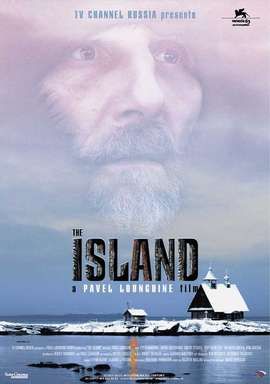
Thanks to Father Aidan Kimel I came to know this remarkable film recently and I have watched it twice in recent weeks. Now I want everyone I know to see it too. Father Kimel has written an excellent review and includes a link to the film and I have reblogged both here. I particularly liked the phrase in his review that begins, “To his surprise, irritation and bewilderment, God makes him…” I will let you read the rest of the sentence and the rest of the review.
That phrase made me ponder the question, What has God made me do over the years that I have not welcomed and yet has proved to be essential in revealing my True Self, that which God loves?
I do hope that some of you will watch The Island and that you will let me know your response. I know that it will change me on repeated viewings over the years.

Fr Aidan Kimel's avatarEclectic Orthodoxy

A few weeks ago Fr Ioan Badilita, Romanian priest and Dogmatic professor at the Theological Seminary in Iasi, encouraged me to watch The Island. I immediately ordered it from Amazon. This past Friday evening my wife and I sat down and watched it.

I loved it … no … that is not the right word. I was moved and inspired by it. It touched my soul. I know I will watch it again. It is a movie that I need to watch once a year. Lent would be the right time.

The Island presents the story of a man who commits a terrible act of betrayal and violence, becomes a monk, and spends the rest of his life offering penance and tears to God. And to his surprise, irritation, and bewilderment, God makes him a fool for Christ and worker of miracles. Fr Anatoly does not wander the streets nor…

View original post 275 more words